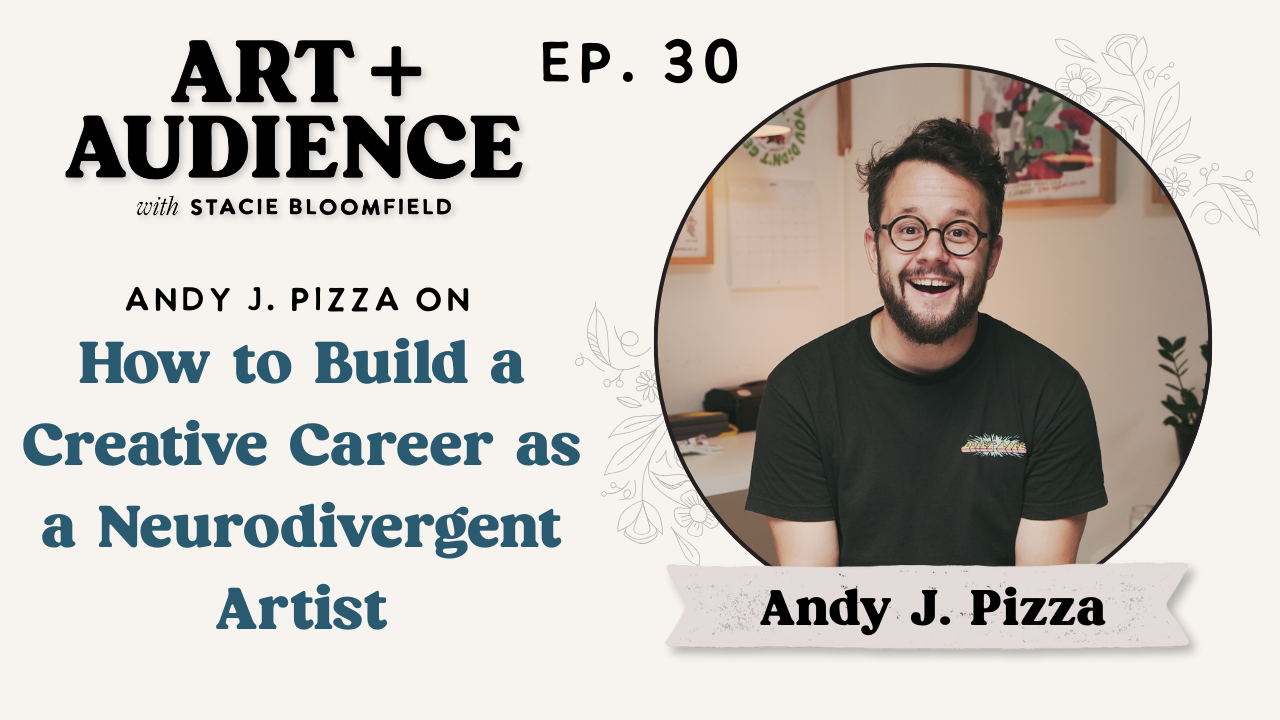
Andy J. Pizza on How to Build a Creative Career as a Neurodivergent Artist
In this powerful two-part conversation, Stacie Bloomfield sits down with the ever-insightful and hilarious Andy J. Pizza, illustrator, speaker, and host of the beloved Creative Pep Talk podcast, for a candid discussion about what it really means to build a creative life that works for you. Part one of their conversation dives into identity, mental health, neurodivergence, and the often nonlinear path to creative success.
Key Takeaways from This Episode
- Neurodivergence can be a creative strength — if you understand how you actually work. Andy lives with ADHD and speaks openly about how understanding his brain has changed his creative practice. The goal isn't to work like everyone else; it's to work like you.
- Self-acceptance is the foundation everything else is built on. Before you can build a sustainable creative career, you have to genuinely accept who you are — how your brain works, how you work, and what kind of life you're actually trying to build.
- Therapy and personal transformation are part of many artists' growth. Andy talks honestly about how therapy has shaped his creative and professional life. There's no shame in investing in your mental health as part of investing in your career.
- Redefining productivity on your own terms changes everything. The conventional definition of productivity doesn't work for everyone — especially neurodivergent creatives. Andy invites artists to question what "productive" actually means for them, not just what it's supposed to mean.
- There is no one right way to build a creative career. This episode is a permission slip for artists who feel like they're doing it wrong. You're not wrong — you might just be doing it differently, and that's okay.
Creativity, Mental Health, and Making It Work For You
The heart of the conversation lies in both artists' honest exploration of how mental health and neurodivergence have shaped their creative paths. Andy, who lives with ADHD and other mental health conditions, sees his creative process as part career strategy, part self-preservation.
“I have all these different mental health things that I’ve tried to account for in my creative career path strategy,” he shares. Rather than forcing a one-size-fits-all approach, Andy advocates for designing a life and work routine that aligns with who you really are.
Stacie opens up about her own journey with OCD, and how her brain’s need to obsessively dive into details once seemed like a flaw, but now fuels her art. “We can't replicate Andy’s life. We can't replicate mine. It has to be what serves you,” she says.
Self-Acceptance as a Creative Foundation
Andy reflects on his early days of making art while simultaneously trying to reject parts of himself, especially the aspects he associated with his estranged mother, who also likely had undiagnosed ADHD. “You can’t run away from yourself and self-express at the same time,” he says. It wasn’t until he began accepting and understanding his neurodivergence that he started creating work that truly felt authentic.
He shares a profound truth from one of his podcast series, Right Side Out: “You can’t make art you love if you hate yourself because art is self-expression. You’re never gonna love that expression if you hate the thing it’s an expression of, which is you.”
Therapy, Transformation, and Redefining Productivity
Both Andy and Stacie discuss the transformative role therapy has played in their lives. Stacie talks about breaking free from the punishing internal voice that had driven much of her career. “I was afraid to be happy as a creative,” she admits. “But when it can come from a place of joy and celebration, it’s way more fun. And fun is not bad.”
Andy agrees, explaining how he’s learned to work with his ADHD by embracing what works, like listening to a new playlist every time he runs, or switching up his creative routine regularly. “Same thing, different way, that’s how I make habits stick,” he says. He also jokes that being neurodivergent is like having an “evil elf” in your brain who sabotages you if you try to be too direct.
Letting Go of the “One Right Way”
Perhaps the most resonant theme from this episode is the rejection of rigid paths to success. “Everyone wants the formula,” Stacie says, recalling the years she tried to model her life after someone with a completely different rhythm and energy. But what works for someone else might not work for you—and that doesn’t mean you’re broken.
Andy offers an empowering alternative: pulsing between seasons of creativity, reflection, execution, and rest. “It’s not ‘this is the answer,’ it’s ‘this, then that.’ That’s how you build something sustainable.”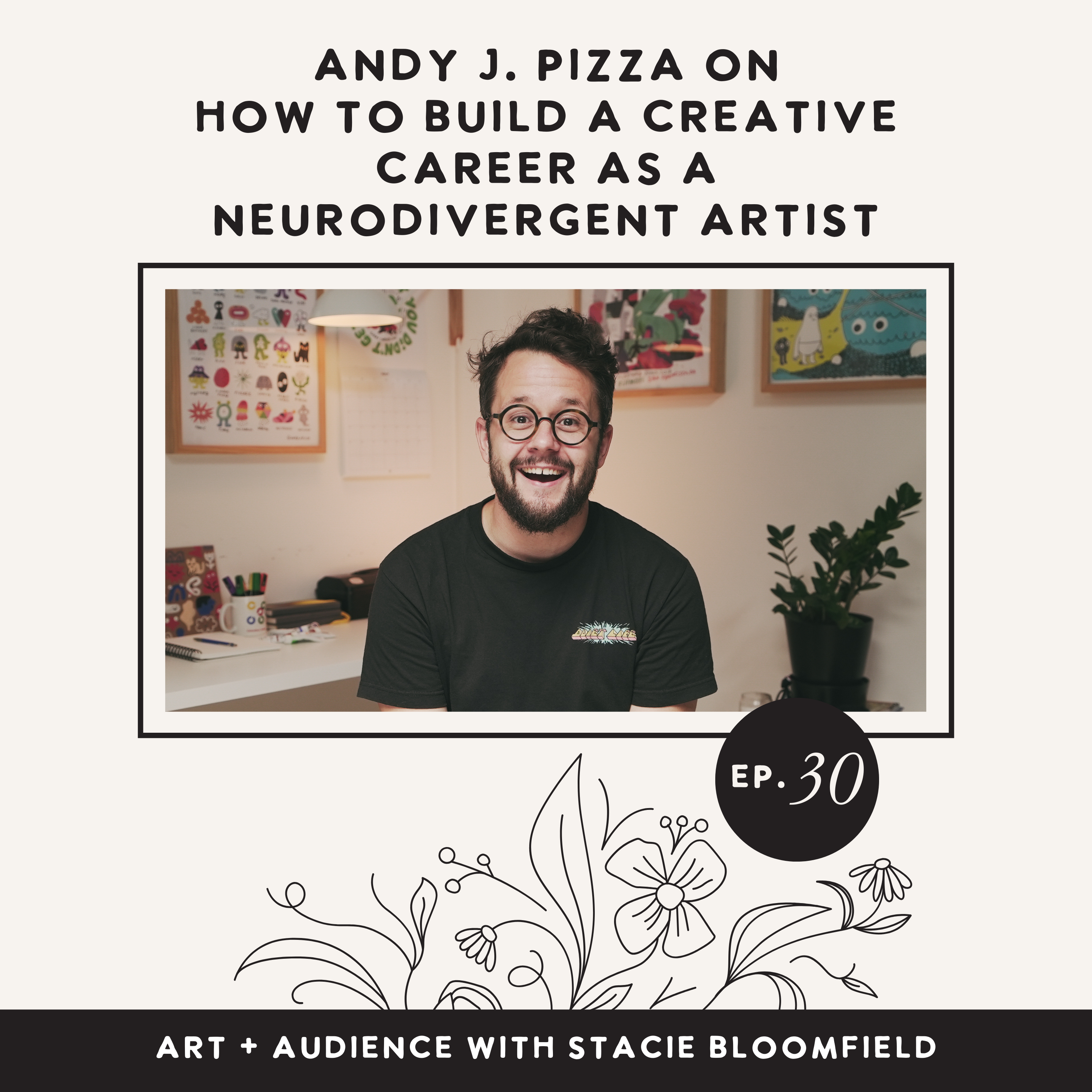
Final Thoughts: You Don’t Have to Earn the Right to Be Yourself
Stacie and Andy’s conversation is an invitation to trust your wiring, redefine success, and build a life that honors who you are. Whether you’re just starting out or 16 years into your creative business, this episode reminds us that the work is better, and life is richer, when you stop trying to be someone else and start leaning into the person you already are.
Stay tuned for Part 2, where Andy and Stacie explore the dance between intuition and structure, the myth of creative perfection, and why embracing messy starts, crockpot ideas, and whole-brain thinking might just be the secret to a fulfilling creative career.
MORE FROM ANDY J. PIZZA
Frequently Asked Questions About Creativity and Neurodivergence
How does Andy J. Pizza approach creativity with ADHD?
Andy has been open about living with ADHD and other mental health conditions, and how that's shaped the way he works. Rather than trying to force himself into neurotypical productivity systems, he's built a creative practice that works with how his brain actually functions. His approach involves embracing the intensity and pattern-recognition that come with ADHD while building structures that prevent the chaos from overtaking the work.
What does it mean to redefine productivity as a creative?
For Andy, redefining productivity means stepping back from the metrics that don't serve you — output volume, consistency schedules, hustle culture benchmarks — and designing a workflow that produces your best work in a way that's actually sustainable. This might look different from what productivity "should" look like, and that's the whole point. What matters is whether you're doing meaningful creative work and whether it's supporting the life you want to live.
How can neurodivergent artists build sustainable creative careers?
Andy's core message is that sustainable creative careers for neurodivergent artists start with self-acceptance — understanding your actual strengths and limitations, and building around them rather than against them. Practical tools include working with your natural energy patterns, using external accountability structures, and giving yourself permission to work differently from the mainstream. If you're a neurodivergent artist building an art business, Art Licensing Playbook is a flexible, self-paced option that works with a variety of learning styles and schedules.
StacieBloomfield.com needs the contact information you provide to us to contact you about our products and services. You may unsubscribe from these communications at anytime. See our privacy policy for terms and conditions and to learn how we protect your data.