How Ben Taylor Paladino Turned Watercolor into a 7-Figure Art Brand
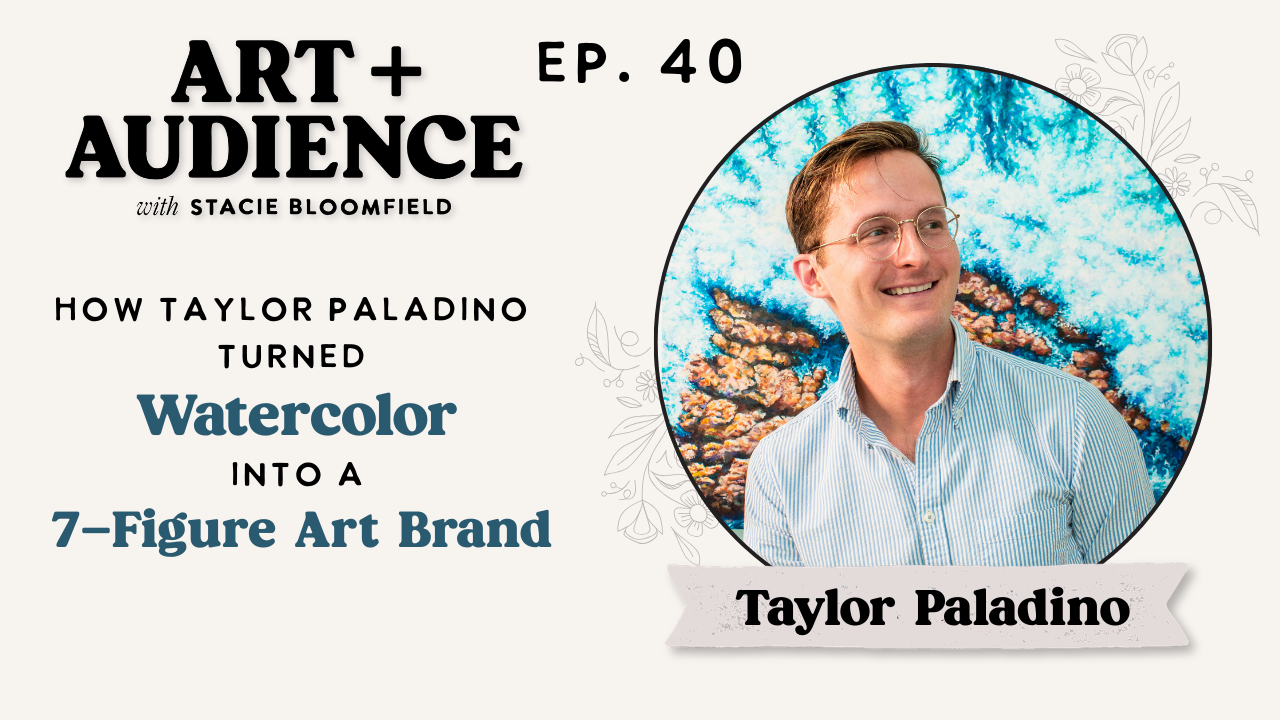
Ben Taylor Paladino might be known as the “King of Christmas,” but what really makes his business shine is the strategy behind the sparkle.
In this episode of Art + Audience, Stacie sits down with Dallas-based watercolor artist and product entrepreneur Ben Taylor Paladino. His paintings live everywhere from greeting cards and tea towels to mahjong tile sets and custom ornaments. What began as a COVID side hustle has grown into a fast-scaling brand with more than 6,500 SKUs, a 100-page wholesale catalog, and annual sales well over one million dollars.
Let’s unpack how he built it and what artists can learn from his path.
A Watercolor Hobby That Turned Into a Business
Taylor paints everything by hand in watercolor. Each piece is scanned and transformed into products ranging from paper goods to home decor to seasonal collections and collaborations.
As he shared in the episode, he sees products as vessels for his art. If something can carry a design well, he is open to trying it.
That mindset alone expands possibilities. Instead of thinking like “just” a painter, Taylor thinks like a brand builder.
The Collaboration That Put Him on the Map
One of Taylor’s biggest visibility moments came through a collaboration with Oh My Mahjong. The project took about a year from first conversation to launch, but once it hit, it made waves.
Taylor shared that the mahjong tiles really put him on the map in a lot of ways.
It is a powerful reminder that the right collaboration can accelerate growth, but those opportunities are often built on relationships and patience.
The Year That Changed Everything
Before this became a million-dollar business, Taylor was a Stanford student studying public policy. Watercolor was a side project. During COVID, he took a year off and committed to selling his greeting cards at a Dallas farmers market every weekend.
He did not sell out on day one.
In fact, he was very clear. Absolutely not.
But that year taught him more than any class could have. He learned how to talk about his art. He learned how to read customers. He learned which designs actually resonated.
Nobody was buying the roses. Everybody was buying the golden retriever.
There is something powerful about real-time feedback. When people stop at your booth and reach for something, that tells you more than online metrics ever could.
Vulnerability Is Part of the Process
Selling in person also meant learning to handle rejection.
Taylor talked openly about needing thick skin. Most people are kind and encouraging. A small percentage are not. When your work is personal, that can sting.
But sharing your art requires vulnerability. And vulnerability builds resilience over time.
If you want to grow, you cannot avoid that part.
Two Sides of the Business
Taylor sees his company as having two core arms.
Wholesale
This includes trade shows, gift markets, boutiques, and larger retail accounts like The Container Store and Dillard’s. Wholesale provides consistency. There are predictable buying seasons. There are repeat orders.
But wholesale is also a volume game. Margins are slimmer. Operations are more complex. It takes infrastructure to support it.
Retail
Retail includes his website and in-person holiday markets. Interestingly, the retail side often delivers higher profit margins.
At the Nutcracker Market in Houston, he does roughly one tenth of his annual business in just five days.
That is the power of getting in front of people who are ready to buy.
A Small Opportunity That Turned Big
One of the best stories from the episode is how The Container Store found him.
A buyer discovered Taylor at the Dallas farmers market.
That is it.
The lesson is simple. Do not underestimate the small beginnings. You never know who is walking past your table.
6,500 SKUs and the Reality of Scaling
When Stacie asked how many SKUs he carries, Taylor estimated around 6,500.
To put that in context, he has around 800 designs. Each design may exist as a greeting card, a boxed set, a notepad, and more. Multiply that across product categories and it adds up quickly.
The hardest part is not painting. It is data management, barcodes, inventory tracking, and systems.
Creative growth eventually demands operational growth.
The Smart Inventory Move
One of the most strategic decisions Taylor made was bringing paper production in house.
He leases digital presses and prints paper goods himself. That allows him to print to order rather than stocking massive amounts of inventory.
Instead of tying up cash in thousands of units that may or may not sell, he produces based on demand.
For artists who feel stuck because inventory feels risky, this is an important mindset shift. There is often more than one way to scale.
Building an Unexpected Team
When Taylor needed help during a busy holiday season, he connected with a Dallas nonprofit called The Senior Source. Through that connection, he built a team that includes retired school teachers.
He said you will never find anybody who works harder than a school teacher.
Hiring does not always have to look traditional. Sometimes the best team members are hiding in places you would not think to look.
Advice for Artists Just Starting
Taylor’s advice is clear.
Start with retail.
Get in front of people at farmers markets, pop-ups, or holiday shows. Sell at full retail prices. Learn what resonates. Build proof of concept.
Wholesale can come later once you have momentum and systems in place.
That early stage clarity can save you years of guesswork.
Creative Pressure and Growth
Every six months, Taylor releases a new wholesale collection. That means 50 to 100 new designs. Often created in a tight two-week window before the catalog deadline.
He admitted something many creatives relate to. He paints better under pressure. But it is not always healthy.
As the business grows, the systems have to grow too. Protecting creative energy becomes just as important as increasing revenue.
Dream Collaboration
When asked about a dream collaboration, Taylor did not hesitate.
He wants to design a scarf for Hermès.
For him, that would be the crown achievement. A moment where creativity, luxury, and brand identity align.
Final Thoughts
What stands out most about Taylor’s journey is not just the revenue growth or the number of SKUs.
It is the willingness to start small. To stand at a folding table and learn. To experiment with products as vessels. To invest in systems. To keep painting even when the pressure is high.
He is building toward a future where he can step fully into the role of creative director while a strong operational foundation supports the brand.
For artists listening, there is a clear through line.
Get in front of people.
Learn what sells.
Build systems that support your creativity instead of draining it.
And then keep going.
Because sometimes the leap from farmers market to million-dollar brand is not about luck. It is about commitment, iteration, and showing up again next Saturday.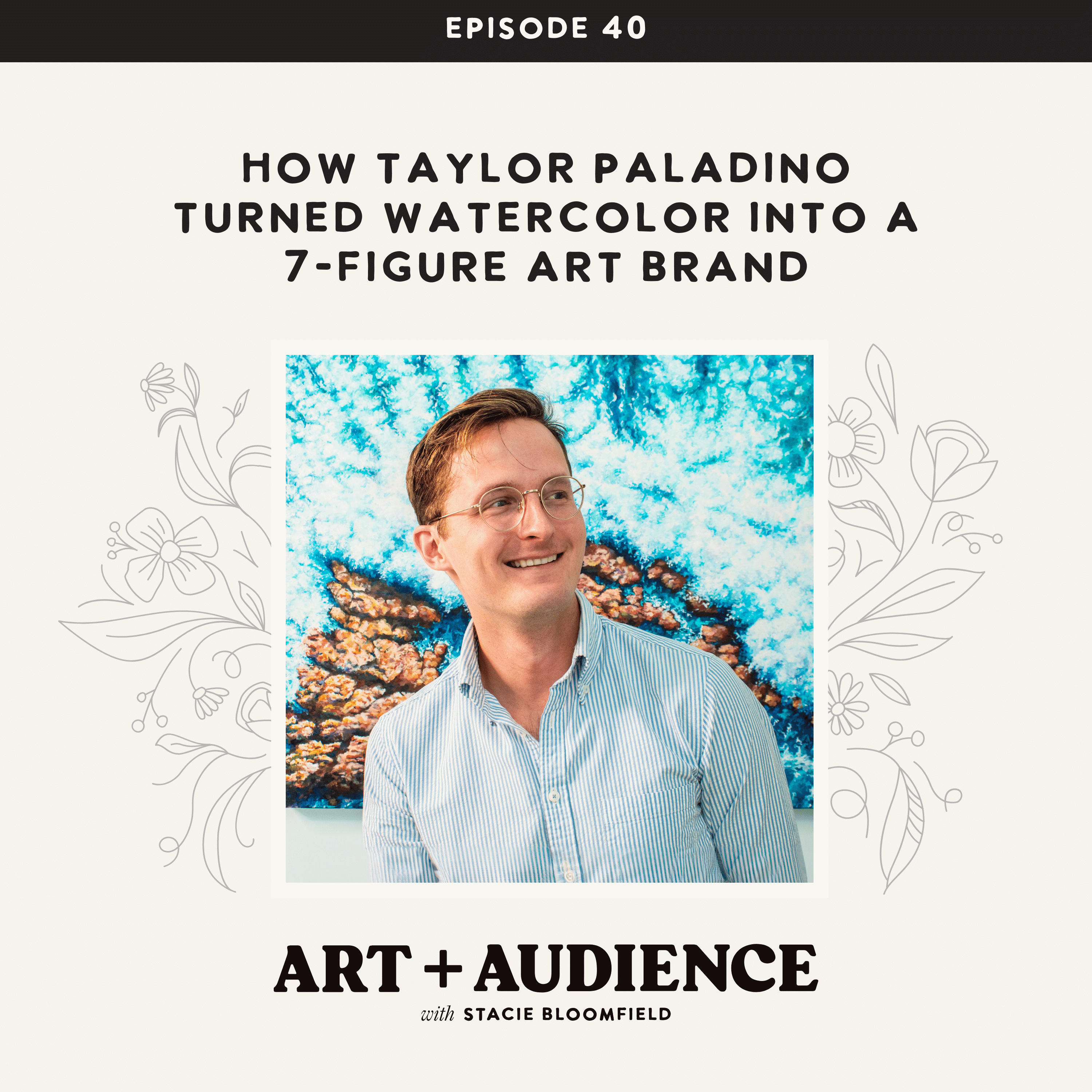
Follow Taylor on Instagram @taylor.paladino to see behind-the-scenes peeks at new watercolor designs, holiday launches, mahjong collaborations, and the real-life moments that go into building a fast-growing art brand.
If this episode resonated, share it with your fellow artists. Don’t forget to subscribe, rate, and review the Art + Audience Podcast. Follow Stacie on Instagram @gingiber | @leverageyourart.
Get a copy of Stacie’s book: The Artist's Side Hustle. OUT NOW!
If you have questions about your own art journey? Call the Art + Audience hotline at (479) 966-9561, and Stacie might answer your question in a future episode!
StacieBloomfield.com needs the contact information you provide to us to contact you about our products and services. You may unsubscribe from these communications at anytime. See our privacy policy for terms and conditions and to learn how we protect your data.