How to Start a Print Club: Lessons from Madison Phipps
How to Start a Print Club: Lessons from Madison Phipps
🎧 Listen to this episode on Apple Podcasts
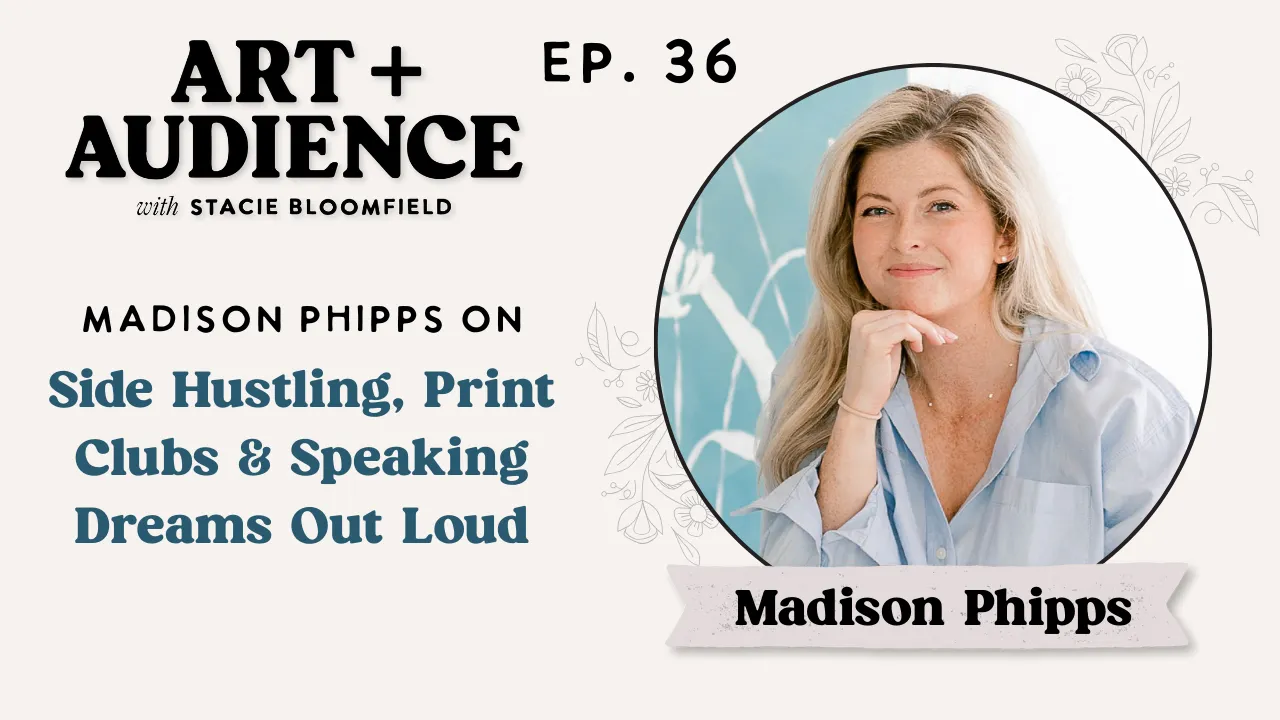
What is a print club, and can you really start one while working full-time and raising a family?
Madison Phipps is a Houston-based artist, mom to a toddler, and full-time professional, and she’s building a creative side business in the margins of an already full life. No studio. No dedicated work hours. Just nap times, evenings, and a whole lot of heart.
In this episode of the Art + Audience podcast, Stacie Bloomfield talks with Madison about what it actually looks like to say yes to your creative dreams before everything is figured out.
They talk about cold-pitching yourself onto a podcast, starting a monthly print club, consigning original art, and speaking your goals out loud until they become real.
If you’ve ever told yourself you’ll start when you have more time, Madison’s story is a direct answer to that.
New to the print club business model? Start with What Is a Print Club? Then read How to Start a Print Club for a complete step-by-step guide.
Resources Mentioned in This Episode
- Madison Phipps Studio: Madison’s website and shop, featuring coastal-inspired botanical paintings.
- @madison.phipps.studio on Instagram: Follow Madison as she documents her creative journey in real time.
- The Artist’s Side Hustle: Stacie Bloomfield’s Hay House book and practical guide for artists building a business in the time they actually have.
5 Lessons About Starting a Print Club and Building an Art Side Hustle
1. Say Yes Before You’re Ready, Then Figure It Out
Madison cold-pitched herself to be on this podcast before she had a big following, a polished business, or a clear strategy. That pitch, and the habit behind it, is the whole lesson.
Her guiding question is:
“What’s the best that could happen?”
Not, “What if it goes wrong?” What if it goes right?
That reframe gave her permission to cold-pitch galleries, launch a subscription print club, and keep creating even when nothing felt finished. She didn’t wait for certainty. She created a roadmap by asking what would happen if things actually worked out.
Most artists are waiting for something: more time, more confidence, or a better portfolio.
Madison is proof that the act of starting is often what creates the conditions for those things to arrive.
2. Limited Time Can Make You More Focused
Creating during nap times and evenings sounds like a limitation. Madison has made it a feature.
“Because my time is so limited, it forces me to focus,” she says.
She doesn’t have the luxury of sitting in front of a blank canvas for hours and hoping inspiration strikes. She has to know what she’s making before she sits down.
Constraints clarify your priorities. When you only have 45 minutes, you don’t have time to overthink. You make the next piece in the series, write the next email, or post the thing.
Madison’s results, including a print club, consignment relationships, Etsy sales, and a growing TikTok audience, show that limited time can become fuel instead of a barrier.
3. A Print Club Doesn’t Have to Be Big to Be Worth It
A print club is a subscription where members pay a recurring fee to receive artwork in the mail on a regular schedule.
Madison’s print club is one of her most personal business ventures. Members pay $14 per month and receive a coastal-themed art print with a handwritten note. Each envelope feels like a small surprise arriving in the mailbox.
It’s not her highest revenue stream, and it isn’t meant to be.
“I don’t want mine to grow exponentially big,” Madison shares. “It’s a fun way to connect with my audience.”
Not every offering needs to scale into a massive business. Some offers exist to build trust, create joy, and keep you connected to the people who love your work.
A thoughtfully designed monthly print club can do all three.
For a closer look at the recurring-income side of this model, read How to Start a Monthly Print Club.
4. Consignment Can Connect Your Art With the Right Buyers
After cold-pitching a high-end Houston boutique, Paloma & Co., Madison sold out two collections of her original botanical paintings and began working on a third.
The boutique takes a commission, and Madison is comfortable with that arrangement.
“They have the clientele, they market it, they ship it, and I didn’t have those things in my repertoire yet.”
Consignment isn’t necessarily giving part of your income away. In the right partnership, you’re paying for access to an established audience, trusted retail environment, marketing support, and fulfillment services.
If you have original artwork sitting in your studio, one thoughtful cold pitch to the right boutique could help you reach buyers you haven’t been able to reach on your own.
5. Speak Your Creative Dreams Out Loud
Both Stacie and Madison return to the power of articulating what you want throughout the episode.
Don’t just think it. Don’t only write it in your journal. Say it.
Say it to a friend. Include it in a podcast pitch. Bring it into a conversation with someone who may be able to open a door.
“Sometimes we talk about all the external things keeping us from what we want,” Stacie says. “But what we say about ourselves can open doors or close them.”
Madison’s business is evidence that speaking your dreams out loud before you feel ready can be one of the most strategic things a creative person does.
How to Start a Print Club of Your Own
Madison’s story shows that you don’t need a studio, a massive audience, or unlimited hours to begin.
You need a simple plan you can sustain.
Choose What Your Members Will Receive
Decide what kind of print you’ll send and what will make the subscription feel cohesive. Madison chose coastal-inspired artwork that aligns naturally with her existing style and audience.
Your print club could feature botanicals, animals, seasonal artwork, encouraging messages, or another recognizable theme.
Set a Sustainable Monthly Price
Your price should cover printing, packaging, postage, platform expenses, and the time required to prepare each mailing.
You also need enough margin left over for the print club to feel worthwhile.
Create a Consistent Mailing Schedule
Choose a schedule you can realistically maintain. Members should understand when they’ll be charged and when they can expect their artwork to arrive.
Consistency builds trust.
Use a Recurring Payment Platform
A print club works best when payments, addresses, pauses, and cancellations are managed automatically.
SnailMailHQ is designed specifically for artists running print clubs and monthly art subscriptions. Members pay automatically, while you focus on creating and mailing the artwork.
Invite Your Warmest Audience First
You don’t need thousands of followers to begin.
Start by inviting the people who already engage with your artwork, open your emails, purchase from your shop, or respond to your social media posts. Your first goal isn’t to build the largest possible club. It’s to welcome your first members and create an experience they’ll want to continue.
Print Club Resources for Artists
Ready to explore the business model further?
- What Is a Print Club?: Learn how a print club works and why people subscribe.
- How to Start a Print Club: Follow the complete process for creating and launching your club.
- How to Start a Monthly Print Club: Learn how to turn your print club into recurring monthly income.
- SnailMailHQ: Manage recurring payments, member addresses, pauses, and cancellations.
- The Print Club Course: Get the complete playbook, including pricing, launch scripts, and retention strategies.
More From Madison Phipps
🌐 Website: madisonphippsstudio.com
📸 Instagram: @madison.phipps.studio
Subscribe to the Art + Audience Podcast
If this episode sparked something for you, follow Art + Audience and leave a review on Apple Podcasts.
New episodes feature honest conversations with artists about growing their audiences, building creative businesses, and navigating the decisions that shape their careers.
Frequently Asked Questions About Starting an Art Side Hustle
How do you build an art business when you have a full-time job and a family?
Work within the margins of your existing schedule, including nap times, evenings, lunch breaks, or early mornings, and treat those hours as protected creative time.
Madison Phipps built a print club, developed consignment relationships, sold through Etsy, and grew her social media presence without a studio or dedicated work hours.
Focus on one income stream or priority at a time so your limited hours can create meaningful progress instead of being spread too thin.
What is a print club?
A print club is an art subscription where members pay a recurring fee to receive a new print in the mail on a regular schedule.
Artists can use print clubs to create predictable income, build stronger relationships with collectors, and turn existing artwork into a memorable monthly experience.
How do you start a print club as an artist?
Choose a recognizable theme, decide what members will receive, calculate a price that covers your expenses, and select a platform that can process recurring payments.
Then invite your warmest audience to become founding members. Start with a simple offer you can deliver consistently before adding extra products or complicated membership benefits.
Read the full guide to starting a print club as an artist.
How much should an artist charge for a monthly print club?
Your price should cover printing, packaging, postage, platform fees, and the time required to fulfill each mailing.
The right price depends on the size and quality of the print, whether it’s signed, what additional items are included, and how much shipping costs. Madison’s print club is $14 per month and includes a coastal-themed print and handwritten note.
Is consignment worth it for artists selling original paintings?
Yes, especially when you’re still building your audience.
Consignment at the right venue gives you access to established buyers and may remove some of the work involved in marketing, selling, and shipping your artwork. The commission you pay can be viewed as the cost of gaining access to those services and that audience.
Madison sold out two collections of original botanical paintings through consignment and began working on a third.
About Stacie Bloomfield
Stacie Bloomfield is the founder of Gingiber, a surface pattern design and art licensing brand she built from her dining room table into a multimillion-dollar business with products in 1,400+ brick-and-mortar stores. She has earned $500K+ through art licensing and has taught 5,000+ artists how to build real income from their work.
She is the author of The Artist's Side Hustle (Hay House), a Moda fabric designer, and the host of the Art + Audience podcast. Her programs, including Side Hustle Society, Leverage Your Art, and Art Licensing Pitch Playbook, help artists at every stage turn their creativity into consistent income.
StacieBloomfield.com needs the contact information you provide to us to contact you about our products and services. You may unsubscribe from these communications at anytime. See our privacy policy for terms and conditions and to learn how we protect your data.