
How Many Emails Should You Send? The Answer That Scaled Gingiber to $2M — with Angie Classen
🎧 Listen to this episode: Apple Podcasts
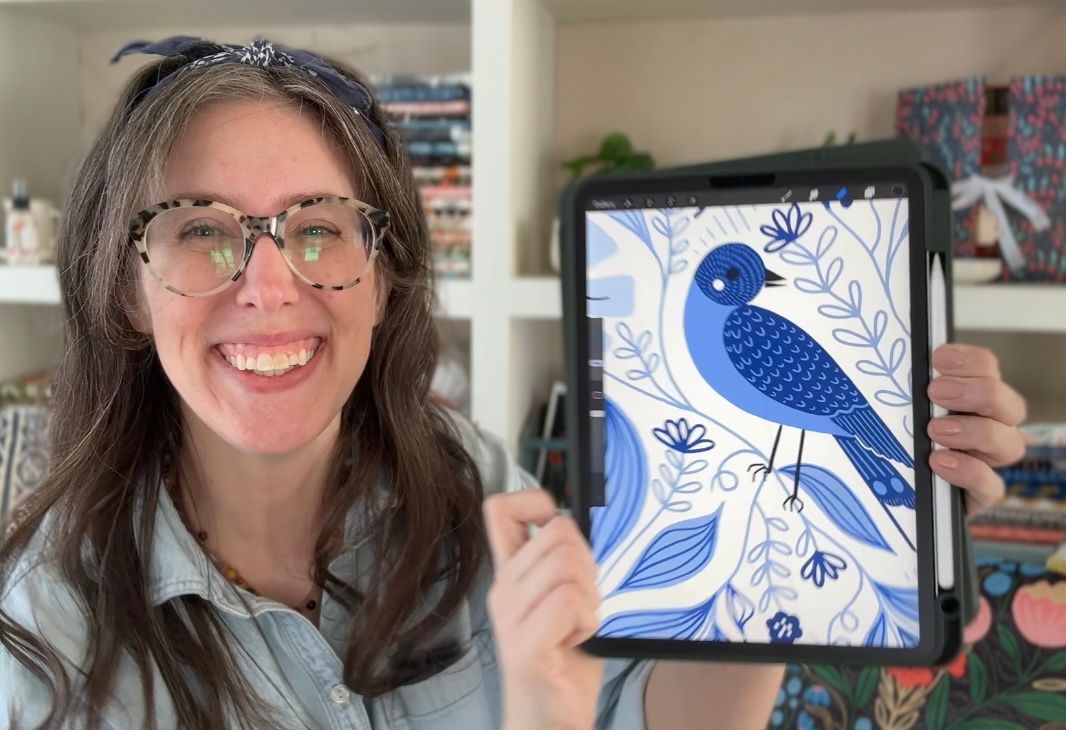
How many emails should you send your list? It's one of the most common questions artists ask — and the answer that helped Stacie Bloomfield's brand Gingiber grow from a $100K Etsy shop to a $2M business might surprise you.
In this episode of the Art + Audience podcast, Stacie sits down with her longtime business partner and sister Angie Classen for an honest, practical conversation on email marketing. Not the theory — the actual campaigns, the actual frequency, and the actual results that changed how they run Gingiber's marketing. If you've been avoiding email because you don't want to be annoying, this episode is going to reframe everything.
RESOURCES MENTIONED IN THIS EPISODE:
- Gingiber — Stacie Bloomfield's surface pattern design and art licensing brand. The living proof behind everything she teaches — built from a $100K Etsy shop into a $2M+ business through strategy, not luck.
- The Artist's Side Hustle — Stacie's Hay House book. The email marketing principles in this episode are part of the foundation of what she teaches — the book makes it all practical and actionable.
- Side Hustle Society — Stacie's membership community for artists building real businesses. The place to keep applying what you're learning in episodes like this one.
HERE ARE THE 5 KEY TAKEAWAYS FROM THIS EPISODE:
1️⃣ Email Still Converts Better Than Almost Any Other Platform — If You Use It
Many artists assume email is outdated or worry about annoying people. Angie and Stacie are direct: email still converts better than social media for product-based businesses, and the fear of sending too much is the thing that's holding most artists back.
Social media shows you to a fraction of your followers. Email arrives directly to the inboxes of people who specifically asked to hear from you. That permission is valuable. And the artists who underuse it — sending one newsletter a month, carefully, so as not to bother anyone — are leaving real revenue on the table. Your audience wants to hear from you more than you think.
2️⃣ The 5-4-3-2-1 Campaign — A Simple Email Sequence That Drives Sales Every Day
To prep for Mother's Day, Angie built a five-day email countdown: one email per day, each featuring a single best-selling Gingiber product from a different category. That's it. Simple, clear, and timed around when buyers are already thinking about gifts.
The results: sales every single day of the campaign. Low unsubscribes. Minimal spam complaints. Their customers appreciated the reminders because the emails were relevant and timed right. Frequency isn't the problem — irrelevance is. When emails match your audience's buying moment, they work. The 5-4-3-2-1 structure is replicable for any product-based business with a holiday or season on the horizon.
3️⃣ Repurpose What You Already Have — Don't Write New Content Every Time
One of Angie's go-to strategies is repurposing. For the Mother's Day campaign, she took a single existing blog post and split it into five emails — one per product, each with customer reviews and a clear discount. No new content created. Just existing content organized into a focused sequence.
Your audience benefits more from a focused message about one thing than from a newsletter packed with everything. Stop trying to write something entirely new every time you send. Use what you've already created. Pull quotes from your blog. Feature testimonials from your shop. Share one product story in depth. The simpler and more focused the email, the higher the conversion tends to be.
4️⃣ Unsubscribes Are a Feature, Not a Bug
Stacie and Angie both know firsthand that sending more emails feels uncomfortable, especially at first. Many creative people are feelers — they don't want to annoy anyone, and they take every unsubscribe personally. They've worked through this by reframing what an unsubscribe actually means.
An unsubscribe is a gift. It means your list is self-selecting toward people who actually want to hear from you. A smaller list of engaged buyers is dramatically more valuable than a large list full of people who delete your emails without opening them. Over time, consistent sending doesn't shrink your audience — it refines it. The people who stay are the ones worth staying connected to.
5️⃣ Your Business Model Shapes Your Email Strategy — Don't Copy the Wrong Playbook
What works for an Etsy-based product business doesn't work the same way for an art licensing business or an online education brand. Angie and Stacie are clear about this: take email advice from people who actually operate in your business model, not just from generic marketing voices.
Product businesses can email multiple times a week around launches, seasons, and new arrivals. Licensing-focused artists should send less frequently but more deliberately — pitches, new collection announcements, relationship-building. Education businesses live and die by their launch sequences. Know which category you're in before you adopt someone else's frequency.
SUBSCRIBE & REVIEW THE ART + AUDIENCE PODCAST
Has email marketing been the missing piece in your art business? Call the Art + Audience voicemail at (479) 966-9561 — Stacie might answer your question in a future episode. And if this episode helped you, leave a review on Apple Podcasts. It takes 30 seconds and helps other artists find us.
Frequently Asked Questions About Email Marketing for Artists
How often should artists email their list?
For product-based art businesses, Stacie Bloomfield and Angie Classen recommend emailing at least once a week — and multiple times per week during launch seasons or holidays. The fear of emailing too much is almost always worse than the reality. When emails are relevant to what your audience is already thinking about (gift seasons, new collections, product launches), frequency is an asset, not an annoyance.
What should artists write about in their email newsletters?
Start with what you already have: a single product story with customer reviews, a behind-the-scenes process peek, a collection announcement, or repurposed blog content broken into a series. The 5-4-3-2-1 strategy Angie Classen developed for Gingiber is one approach — one email per day for five days, each featuring one product. Focused, simple, and timed around a buying moment is almost always better than a newsletter packed with everything.
How do you build an email list as an artist?
Start by giving potential subscribers a reason to hand over their email — a free resource (an exclusive print, a how-to guide, a discount code), an engaging lead magnet, or early access to a product launch. Then make sure your sign-up form is prominently featured on your website and linked from your social profiles. The list is an asset you own — unlike followers on any platform, email subscribers belong to you regardless of algorithm changes.
About Stacie Bloomfield
Stacie Bloomfield is the founder of Gingiber, a surface pattern design and art licensing brand she built from her dining room table into a multimillion-dollar business with products in 1,400+ brick-and-mortar stores. She has earned $500K+ through art licensing and has taught 5,000+ artists how to build real income from their work.
She is the author of The Artist's Side Hustle (Hay House), a Moda fabric designer, and the host of the Art + Audience podcast. Her programs — including Side Hustle Society, Leverage Your Art, and the Art Licensing Pitch Playbook — help artists at every stage turn their creativity into consistent income.
StacieBloomfield.com needs the contact information you provide to us to contact you about our products and services. You may unsubscribe from these communications at anytime. See our privacy policy for terms and conditions and to learn how we protect your data.