Art Licensing, Niches, and Newsletters: Q&A on Building a Sustainable Art Business
🎧 Listen to this episode: Apple Podcasts
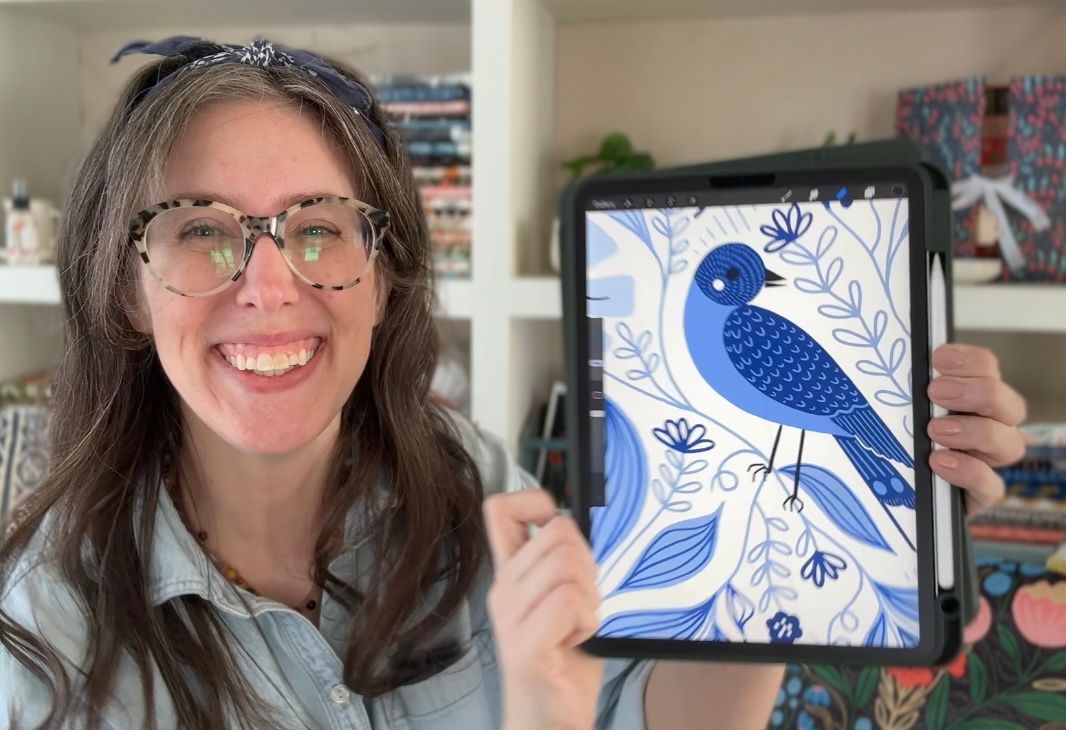
One of the most common struggles artists face isn't a lack of passion — it's too much of it. Three creative directions pulling at once. Multiple income stream ideas, none of them quite ready. A style that's evolving and a voice that hasn't settled yet. In this listener Q&A episode of the Art + Audience podcast, Stacie Bloomfield digs into all of it.
Three artist questions. Three completely different challenges. One through-line: you're not stuck, you're at the start of your next breakthrough. Stacie brings the same directness she brings to the 5,000+ artists she's taught through Leverage Your Art and Side Hustle Society — honest, warm, no-fluff answers built for artists who are ready to move.
RESOURCES MENTIONED IN THIS EPISODE:
- Art Licensing Pitch Playbook — Exactly what listener Mackenzie needed: the step-by-step guide to pitching art licensing deals, choosing the right markets, and writing the kind of pitch that gets a response. Always available.
- The Artist's Side Hustle — Stacie's Hay House book for artists who want to build real income without doing everything at once. Written specifically for artists in the "too much, too fast" phase.
- Side Hustle Society — For artists who want ongoing community and accountability as they work through exactly these kinds of questions. Waitlist opens regularly.
HERE ARE THE 4 KEY TAKEAWAYS FROM THIS EPISODE:
1️⃣ You Can Do Everything — Just Not All at Once
Listener Sarah wants to split her business 50/25/25 across graphic design, pattern design, and needle felting — and teach online. Stacie's response: all of those are possible, and none of them need to happen simultaneously.
The biggest mistake multi-passionate artists make is trying to build every branch of the tree at the same time. The result is a business that feels scattered to buyers and exhausting to run. Stacie's advice: honor what's currently paying the bills (don't drop a working income stream to chase a new one), pick one new direction to build intentionally, and give it real time before evaluating. Momentum comes from depth, not breadth. Start one seed in one plot of ground before you try to farm the whole field.
2️⃣ The Most Lucrative Licensing Markets — and How to Choose Between Them
Listener Mackenzie asked which licensing markets actually pay, and Stacie gives the honest breakdown: home decor and fabric (bedding, tea towels, quilting — high volume, solid royalties), gift and stationery (greeting cards, journals, puzzles — strong seasonal spikes), apparel and accessories (socks, baby clothes — moderate if you find the right brand fit), and big-box retail (Target, Walmart — high reward, but often requires connections or an agent).
Royalty rates typically run 4–10% of wholesale. Exclusivity terms matter — more exclusivity can limit future deals, while non-exclusive arrangements can generate recurring income from the same design. The real question isn't which market pays the most in theory — it's which market aligns with your style and your business model. Even big money isn't worth it if it doesn't fit your brand or your values.
3️⃣ Licensing Is One Slice — Not the Whole Pie
Stacie is explicit about this and it's worth repeating: art licensing is a powerful revenue stream and should be part of your business, but it shouldn't be your entire business. Sustainable art businesses layer multiple streams — licensing and products and community and education, in whatever combination fits your work.
Relying on a single licensing partner, a single platform, or a single income stream creates fragility. When one deal ends or one platform changes its algorithm, your whole business shouldn't end with it. Treat licensing like a foundational stream that supports the rest, not like a lottery ticket you're waiting to cash.
4️⃣ Different Styles Can Coexist — If You Give Them a Coherent Container
Listener Hachiko is an illustrator exploring antique Asian florals and European mosaics alongside her whimsical children's book style. She worries about confusing her audience. Stacie's answer: don't create separate brands — create collections.
Instead of fragmenting your portfolio into multiple identities, organize it by themed collections: "Whimsical & Playful" vs. "Botanical & Ornamental." That way, buyers can find the version of your work that speaks to them, while you maintain a single, coherent artistic identity. The through-line might be your color palette, your use of texture, or your sense of wonder — whatever it is, lead with that thread. Let the audience into your evolution by narrating it: people love watching artists grow when they understand what's driving the change.
SUBSCRIBE & REVIEW THE ART + AUDIENCE PODCAST
Have a question for Stacie? Call the Art + Audience voicemail at (479) 966-9561 and your question might be answered in a future episode. The best way to support the show is to subscribe and leave a review on Apple Podcasts — it takes 30 seconds and helps other artists find us.
Frequently Asked Questions About Art Licensing and Managing Multiple Creative Directions
Which art licensing markets pay the best royalties?
Home decor and fabric (bedding, tea towels, quilting) typically offer the best combination of volume and royalty rates, with royalties usually running 4–10% of wholesale. Gift and stationery (greeting cards, journals, puzzles) are strong especially around seasonal spikes. Apparel and big-box retail can pay well but often require established connections or a licensing agent to access effectively.
How do you manage multiple creative styles as an artist without confusing buyers?
Organize your work into themed collections rather than creating separate brands. Stacie Bloomfield suggests naming collections by aesthetic or mood — "Whimsical & Playful" vs. "Botanical & Ornamental" — so buyers can find the work that resonates with them while your overall brand identity stays coherent. The key is to identify the through-line that connects all your work (your color, your tone, your sense of detail) and lead with that.
How do you know which creative direction to focus on when you have multiple interests?
Don't drop what's currently working — use it as the foundation that funds your exploration. Then pick one new direction, give it your real focused attention for a specific period, and evaluate with data before moving on. Stacie Bloomfield's advice: you can build everything you want, just not all at once. Momentum comes from depth in one direction at a time, not parallel progress in five.
About Stacie Bloomfield
Stacie Bloomfield is the founder of Gingiber, a surface pattern design and art licensing brand she built from her dining room table into a multimillion-dollar business with products in 1,400+ brick-and-mortar stores. She has earned $500K+ through art licensing and has taught 5,000+ artists how to build real income from their work.
She is the author of The Artist's Side Hustle (Hay House), a Moda fabric designer, and the host of the Art + Audience podcast. Her programs — including Side Hustle Society, Leverage Your Art, and the Art Licensing Pitch Playbook — help artists at every stage turn their creativity into consistent income.
StacieBloomfield.com needs the contact information you provide to us to contact you about our products and services. You may unsubscribe from these communications at anytime. See our privacy policy for terms and conditions and to learn how we protect your data.