Building a Brand That Can Survive the Pivot: Mindy Young on Risk Resilience and Going All In
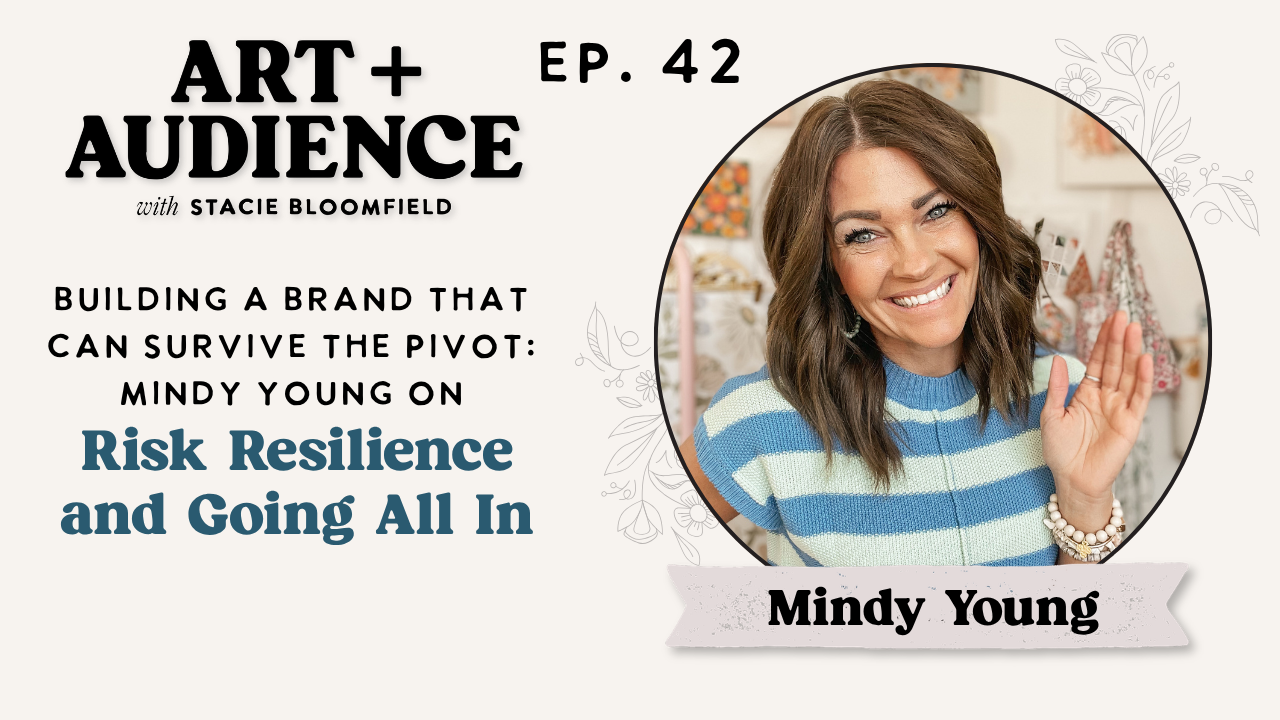
Growth in a creative business almost always begins with risk, and sometimes the biggest risk is knowing when to pivot. In this inspiring episode of the Art + Audience podcast, Stacie sits down with Mindy Young of Indy Bloom Design for a conversation that is equal parts honest, practical, and deeply encouraging. Mindy shares the real story behind building a thriving creative business, navigating major industry changes, and finding the courage to pivot when the foundation beneath you starts to shift.
If you have ever wondered what it really takes to grow from artist to business owner, this episode is full of wisdom you will want to come back to again and again.
Meet Mindy Young of Indy Bloom Design
Mindy Young is the founder of Indy Bloom Design, a brand known for beautiful pattern design and, more recently, stunning wallpaper for little girls’ rooms and nurseries. She began designing in 2016 after the birth of her youngest daughter, when she could not find the kind of nursery décor and clothing she wanted. So, she made it herself.
What started as a personal creative outlet quickly turned into a business. After sharing her designs online, Mindy discovered Spoonflower and began selling there, eventually building a multiple six figure business. But as her business grew, so did the stakes. What once felt stable began to feel fragile when platform changes impacted her sales and customer relationships.
That moment forced Mindy to ask a bigger question. Was she building a business on her own foundation, or someone else’s?
The Difference Between a Hobby and a Business
One of the most powerful parts of this conversation is Mindy’s clarity around what it means to move from hobbyist to business owner.
Creating beautiful things is not enough on its own. At some point, if you want your art to support your life and family, you have to make a decision. You have to commit. You have to get serious about who you are serving, what they want, and how your work fits into their world.
Mindy explains that truly building a business means obsessing over your audience. It means knowing what they love, what they buy, what language they use, and what kind of products make sense for your style. That level of focus is what allows an artist to make smart moves instead of emotional ones.
Her message is clear. If you want to make money with your art, you have to be willing to step fully into the role of business owner.
Why Building on Someone Else’s Platform Can Only Take You So Far
Mindy speaks candidly about the challenges of building a creative business on a platform you do not control. Spoonflower gave her a place to start, and she is still quick to acknowledge that it can be a wonderful launch point for artists. But as policies changed and communication with customers became more limited, she realized how vulnerable that setup really was.
For Mindy, the wake up call came when her husband had already left his job to work in the business full time. Their family was depending on that income. Suddenly, changes outside their control had very real consequences.
Instead of giving up, Mindy used the data she already had. She looked at what had sold best, what customers were responding to, and where the biggest opportunities lived. That research led her to wallpaper.
This is such an important reminder for artists. Platforms can be incredible places to begin, but they should not be the final goal. You need a plan for how to move people into your world, onto your email list, and eventually toward a brand that you own.
Why She Chose Wallpaper and Went All In
When Mindy studied her sales data, one thing stood out. Her wallpaper designs were performing especially well. She was also seeing customer photos and social tags that gave her even more insight into who was buying. The answer became obvious. Her ideal customer was decorating little girls’ rooms and nurseries.
That clarity changed everything.
Rather than trying to be everything to everyone, Mindy leaned into a niche. She chose to become known for one thing and to serve one specific kind of customer really well. She focused on creating wallpaper mockups that felt different from what everyone else was doing and refined her visual brand around a customer she deeply understood.
This decision paid off. In the early months, results were slow. Her first month selling wallpaper on her own brought in just $500, which felt discouraging compared to the larger numbers she had seen before. But she stayed consistent. She kept speaking to the right customer. She kept showing up.
Then the dominoes started to fall.
Within eight months, Indy Bloom had its biggest month yet, bringing in over $20,000 in sales.
What Artists Need to Hear About Growth
There is so much honesty in this episode about the emotional side of building something new. Mindy does not pretend the pivot was easy. In fact, she describes it as one of the hardest things she has ever done. There were years where she felt crushed by the pressure, the uncertainty, and the identity shift that came with changing direction while still showing up as a teacher and leader online.
That transparency is what makes this conversation so refreshing.
Mindy talks about the impostor syndrome that came with watching her business dip after years of success. She shares how hard it was to hold onto belief when the numbers no longer reflected the momentum she had once known. But instead of staying on the floor, she made a decision to get up and figure it out.
That phrase, “figure it out,” became a theme throughout the conversation.
It does not mean pretending things are easy. It means refusing to stay stuck. It means asking what the next right step is and taking it, even when the full path is still unclear.
Alignment Matters More Than People Think
Another standout message from Mindy is the idea of alignment. She believes that artists burn out when they try to force themselves to sell products that do not actually fit who they are, what they love, or where their style belongs.
That insight is so valuable.
Success is not just about choosing a product. It is about choosing a product that works with your artistic voice and with the market you want to reach. It is about understanding trends without losing yourself in them. It is about doing the research, paying attention to what sells, and then finding a way to meet the market in a way that still feels true to you.
For Mindy, that has meant creating trendy, relevant work while still keeping the distinct Indy Bloom feel intact. She studies the market, pays attention to customer preferences, and then turns inward again so she can create from a place of confidence instead of comparison.
The Power of Being All In
If there is one phrase that captures the heartbeat of this episode, it is this: go all in.
Mindy returns to this idea again and again. Dabbling does not build momentum. Showing up halfway does not create trust. Posting a few designs and disappearing for months will not move the needle.
To build real traction, people need to hear from you often. They need to see your work repeatedly. They need to feel your belief in what you are offering.
Mindy encourages artists to act like they are the only person in the world selling what they sell. That kind of conviction changes how you market, how you communicate, and how long you are willing to keep going before results show up.
Her story proves that consistency and commitment matter more than quick wins.
Mindset Is Not Optional
Toward the end of the episode, the conversation turns toward mindset, and it becomes one of the most powerful sections of all.
Mindy is honest about the internal work she has had to do to become the kind of business owner she is today. She talks about limiting beliefs, hard backgrounds, self doubt, and the discipline it takes to show up as the person you want to become before you fully feel like her.
That is the real work so many people never talk about.
Behind every polished product photo and every successful launch is a person who had to wrestle with fear, insecurity, and the temptation to quit. Mindy reminds listeners that no one else can do that inner work for you. At some point, you have to become your own biggest cheerleader.
And when you do, you become very hard to stop.
What’s Next for Indy Bloom Design
Right now, Mindy is focused on continuing to grow the wallpaper side of Indy Bloom Design and making that category as strong as possible before expanding further. But new opportunities are already beginning to show up.
As she explains in the episode, that is one of the rewards of being excellent at what you do. When you are clear, committed, and consistent, other people notice. Opportunities begin to find you.
For Indy Bloom, that may mean expanding into additional luxury print on demand products over time. But for now, the vision is clear. Build the wallpaper brand first. Become known for it. Then grow from a strong foundation.
It is a smart and disciplined approach, and it is exciting to imagine where it could lead.
Final Thoughts
This episode is a masterclass in resilience, focus, and creative entrepreneurship. Mindy Young reminds us that success is rarely a straight line. Businesses shift. Platforms change. Seasons get hard. But none of that means you are done.
Sometimes it simply means it is time to build differently.
If you are in a season of uncertainty, this conversation will encourage you to keep going. Study your audience. Pay attention to the data. Choose alignment over noise. Stop dabbling. And take the next step in front of you.
Mindy’s story is proof that hard seasons do not have to be the end. Sometimes they are the very thing that pushes you toward something stronger.
If you loved this episode, be sure to follow Mindy on Instagram @indybloomdesign and visit indybloomdesign.com to see what she is building. And if this conversation encouraged you, send her a message. As Stacie says, that extra bit of energy you send out has a way of coming back.
Stacie created a marketing calculator that shows why owning your email list is one of the most valuable things you can do as an artist. Get the marketing calculator here: staciebloomfield.com/mcc
If this episode resonated, share it with your fellow artists. Don’t forget to subscribe, rate, and review the Art + Audience Podcast. Follow Stacie on Instagram @gingiber | @leverageyourart.
Get a copy of Stacie’s book: The Artist's Side Hustle. OUT NOW!
If you have questions about your own art journey? Call the Art + Audience hotline at (479) 966-9561, and Stacie might answer your question in a future episode!
StacieBloomfield.com needs the contact information you provide to us to contact you about our products and services. You may unsubscribe from these communications at anytime. See our privacy policy for terms and conditions and to learn how we protect your data.