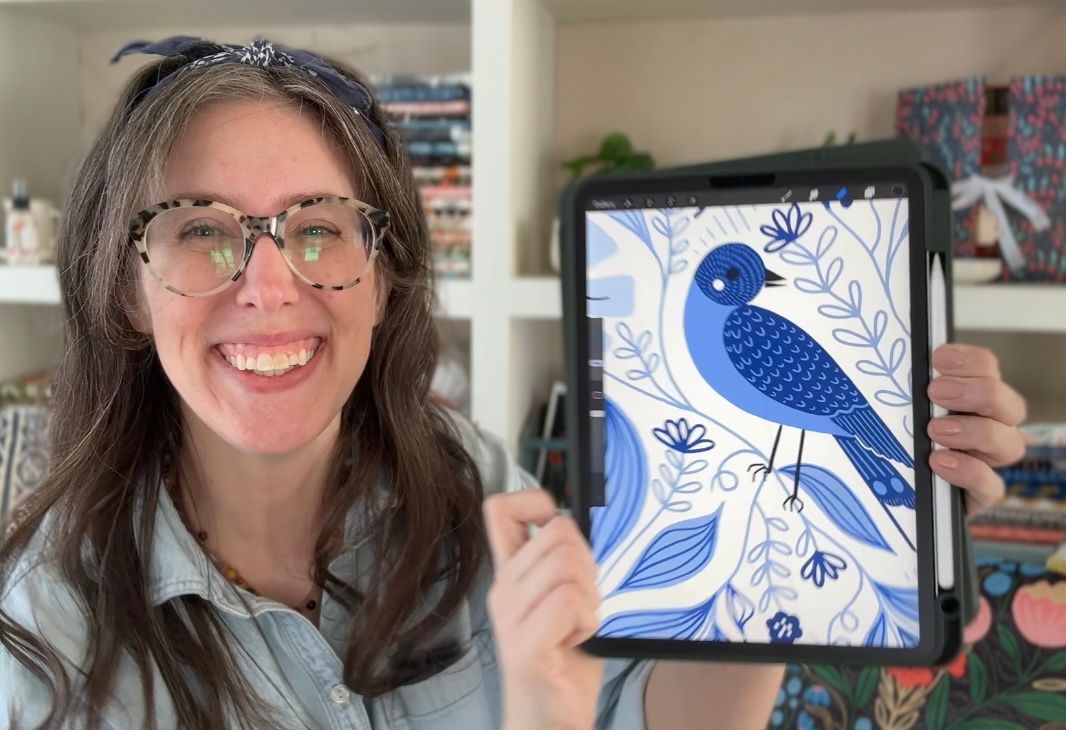
Building Your Art Business in Seasons: Why It's OK When Life Takes Priority
Learn how to build a sustainable art business that accommodates life's changing seasons, from high-intensity creation periods to necessary slowdowns.
One of the most damaging myths about building a creative business is that it requires relentless, consistent forward momentum. Social media reinforces this narrative with its endless stream of "hustle culture" quotes and seemingly superhuman productivity from influencers and successful artists.
The truth? Most thriving art businesses weren't built through continuous, uninterrupted growth. They were built in seasons—periods of expansion alternating with necessary maintenance phases or even temporary slowdowns.
This cyclical approach isn't just more realistic for artists with families, caregiving responsibilities, or fluctuating health—it's actually more sustainable for everyone.
Building Your Art Business in Seasons: When Life Takes Priority
The Problem with Linear Growth Expectations
Linear growth expectations are one of the biggest obstacles solo artists face — because real creative businesses don't grow in straight lines, they grow in seasons.
The conventional business narrative emphasizes constant upward trajectory:
- Regular content creation
- Steady product releases
- Consistent social media presence
- Continual audience growth
While this model works for businesses with employees and departments, it's often unrealistic for solo artists, especially those balancing multiple priorities.
The consequences of trying to maintain this linear growth include:
- Creative burnout
- Declining quality
- Resentment toward the business
- Strained personal relationships
- Health consequences
- Diminished joy in the creative process
The Seasonal Business Model for Artists
Rather than viewing business growth as a straight line, consider it a series of natural seasons, each with distinct priorities and expectations:
1. Growth Seasons (Spring)
Characteristics:
- Higher creative output
- New product or collection development
- Increased marketing efforts
- Active audience building
- Systems development
When they occur:
- During periods of lower external demands
- When health and energy are optimal
- After periods of rest and renewal
- When support systems are functioning well
- Following inspiration or learning phases
How to maximize:
- Have clear priorities and focus areas
- Build content and product buffers
- Document processes for future reference
- Set realistic boundaries to prevent burnout
- Create systems that can run during slower periods
2. Harvest Seasons (Summer)
Characteristics:
- Implementation of established plans
- Consistent creation within sustainable boundaries
- Audience nurturing and engagement
- Refining existing offerings
- Active promotion and sales
When they occur:
- During periods of relative stability
- When systems and routines are well-established
- Following intensive growth periods
- When external demands are predictable
How to maximize:
- Focus on optimization rather than expansion
- Gather audience feedback and data
- Build financial reserves
- Strengthen relationships with existing audience
- Document what's working well
3. Maintenance Seasons (Fall)
Characteristics:
- Reduced creative output
- Focus on essential business functions
- Simplified marketing and engagement
- Leveraging existing content and products
- Preserving creative energy
When they occur:
- During increases in external responsibilities
- Through moderate health challenges
- During family transitions or changes
- When energy is needed elsewhere temporarily
- Following intensive growth periods
How to maximize:
- Determine minimum viable activities
- Leverage scheduling and automation
- Communicate transparently with audience
- Focus on serving existing audience rather than growth
- Use templates and systems to reduce decision fatigue
4. Rest Seasons (Winter)
Characteristics:
- Minimal business activity
- Focus on essential maintenance only
- Significant reduction in content creation
- Automated systems carrying basic functions
- Preservation of foundations
When they occur:
- During major life transitions
- Through significant health challenges
- During family crises or intensive caregiving periods
- When complete creative renewal is needed
- During grief, burnout recovery, or major change
How to maximize:
- Determine what can temporarily pause
- Communicate boundaries clearly
- Set appropriate expectations with audience/clients
- Protect the essential foundations of your business
- Release guilt about necessary slowdowns
Practical Application: Planning for Seasonal Shifts
The key to building a sustainable art business isn't avoiding seasons—it's anticipating and planning for them.
1. Recognize Your Current Season
Start by honestly assessing where you are now:
- What external demands are you navigating?
- How are your energy and health levels?
- What support systems do you have in place?
- How full is your creative well?
This assessment helps you align expectations with reality rather than fighting against your current limitations.
2. Create Season-Specific Plans
Develop different operational models for different seasons:
Growth Season Plan:
- Priority projects and collections
- Marketing campaigns and launches
- Platform expansion goals
- Systems to develop
- Content creation targets
Harvest Season Plan:
- Sustainable creation rhythms
- Engagement practices
- Sales and promotion schedule
- Optimization priorities
- Relationship nurturing
Maintenance Season Plan:
- Essential business activities
- Simplified marketing approach
- Content repurposing strategy
- Reduced but consistent presence
- Energy preservation tactics
Rest Season Plan:
- Minimum viable business activities
- Automated systems and schedules
- Communication templates
- Boundary protection strategies
- Re-emergence preparations
3. Develop Transition Strategies
Moving between seasons requires intentional transitions:
Preparing for Slowdowns:
- Create content buffers
- Schedule automation
- Communicate timeline changes
- Simplify offerings temporarily
- Delegate or outsource where possible
Preparing for Growth Phases:
- Outline priority projects
- Clear secondary responsibilities
- Establish support systems
- Refill creative inspiration
- Set clear boundaries
4. Build Flexible Business Foundations
Design your business model to accommodate seasonal changes:
Multiple Revenue Streams:
- Some requiring active creation
- Others that can run with minimal input
- Varying in time and energy requirements
Flexible Marketing Systems:
- Content that can be batched during high-energy periods
- Evergreen materials that remain relevant
- Automated sequences for quieter periods
Scalable Offerings:
- Products that can be produced in batches
- Digital products with passive delivery
- Services that can be limited or expanded
The Four Pillars of a Season-Proof Art Business
Regardless of your current season, focus on strengthening these foundations:
1. Sustainable Creation Systems
Develop creation processes that can flex with your capacity:
Key Components:
- Batching similar creative tasks
- Templates for repeated processes
- Clear starting points for projects
- Organized supplies and resources
- Documented procedures and workflows
Example Implementation: "During my growth season, I created a systematic approach to developing new patterns. I documented each step and created templates for my most common layouts. When I entered a maintenance season due to family needs, I could still create new work in limited time because I'd eliminated many decisions and inefficiencies."
2. Resilient Digital Presence
Build an online presence that maintains momentum during slower periods:
Key Components:
- Evergreen content strategy
- Scheduled posting capabilities
- Email sequences and automations
- Content categories that can be prepared in advance
- Repurposing system for existing materials
Example Implementation: "I've organized my content into seasonal, evergreen, and educational categories. During high-capacity periods, I create and schedule educational and evergreen posts that remain relevant for months. This allows my online presence to continue serving my audience even during periods when I can't actively create new content."
3. Adaptable Revenue Streams
Develop income sources with varying activity requirements:
Key Components:
- Passive income products
- Established wholesale relationships
- Licensing arrangements
- Digital product offerings
- Limited-time launches during high-capacity periods
Example Implementation: "My business includes print-on-demand products that generate passive income, seasonal limited collections I launch when capacity is high, and licensing relationships that provide quarterly income. This diversity allows my revenue to continue even when I need to scale back active creation."
4. Clear Communication Frameworks
Develop authentic ways to bring your audience along through different seasons:
Key Components:
- Transparent communication about timelines
- Behind-the-scenes sharing that builds connection
- Setting appropriate expectations
- Celebration of both active and quiet periods
- Authentic sharing without oversharing
Example Implementation: "I've found that my audience appreciates honest communication about my creative rhythms. Rather than disappearing during slower periods, I share glimpses of my process, repurpose older content, and maintain connection while being transparent about launch timelines."
Navigating Specific Life Seasons with Your Art Business
Different life seasons call for different business strategies — and knowing which one you're in is the first step to working with your reality instead of against it.
When You're Parenting Young Children
Business Focus Areas:
- Micro-productivity systems (15-30 minute tasks)
- Batched creation during predictable windows
- Digital products that sell while you sleep
- Simple, repeatable processes
- Content systems that maximize each creation session
Permission to Give Yourself:
- Building slower than artists without young children
- Integrated creative time rather than "perfect" studio sessions
- Seasons focused on skill-building rather than output
- Flexible deadlines and launch schedules
- Business models that accommodate interrupted work
During Health Challenges
Business Focus Areas:
- Energy conservation strategies
- Low-physical-demand creative options
- Leveraging existing work through licensing
- Delegation and collaboration
- Streamlined offerings
Permission to Give Yourself:
- Temporary scale-backs without abandoning foundations
- Adapted creation methods that accommodate limitations
- Renewed definition of productivity
- Honoring body wisdom over business "shoulds"
- Finding new creative expressions within constraints
While Working a Full-Time Job
Business Focus Areas:
- Strategic use of evenings and weekends
- Batch creation during high-energy periods
- Systems that run with minimal daily input
- Long-term projects broken into small segments
- Automations for business administration
Permission to Give Yourself:
- Longer timelines for business milestones
- Focused growth in one area at a time
- Simplified product offerings
- Periodic intensive creation retreats
- Seasonal rather than weekly content creation
During Major Life Transitions
Business Focus Areas:
- Core business maintenance
- Simplified client/customer communication
- Essential online presence
- Protecting foundational assets
- Planning for re-emergence
Permission to Give Yourself:
- Temporary pauses in growth-focused activities
- Reduced content creation expectations
- Maintaining rather than expanding
- Honoring the emotional energy of transition
- Integrating new life realities into business vision
The Seasonal Mindset Shift
Beyond practical strategies, building a sustainable art business requires fundamental mindset shifts:
From "Behind" to "Aligned"
Instead of measuring yourself against others' timelines or arbitrary benchmarks, assess whether your business pace aligns with your current life season.
Old Thought: "I should be further along by now." New Thought: "I'm building at the pace that's sustainable for my current season."
From "Consistency" to "Commitment"
Redefine consistency not as doing the same things every day or week, but as committed return to your practice and business through different seasons.
Old Thought: "I have to post/create/engage every day to be successful." New Thought: "My commitment to this business remains constant, even when my active participation fluctuates."
From "Either/Or" to "Both/And"
Replace the false dichotomy between "serious business" and "life accommodation" with the understanding that sustainable businesses adapt to their owners' lives.
Old Thought: "If I can't give this my all right now, I should wait until I can." New Thought: "I can build appropriately for my current season while setting foundations for future expansion."
From "Despite" to "Through"
View your life circumstances not as obstacles to work around but as the unique context that shapes your distinctive creative business.
Old Thought: "I'm building this business despite my caregiving responsibilities." New Thought: "My caregiving experiences inform and enrich my creative perspective and business approach."
This is a mindset Stacie Bloomfield has built her entire teaching philosophy around — the idea that sustainable creative businesses are built on self-awareness and strategic flexibility, not grinding through seasons that aren't built for growth. Her Side Hustle Society community is where artists put this seasonal approach into practice together.
Creating Your Seasonal Business Plan
A seasonal business plan doesn't need to be complicated — it just needs to be honest about where you are and intentional about where you're headed.
Step 1: Season Assessment
Identify your current and upcoming seasons:
- What season are you in right now?
- What factors define this current season?
- What season do you anticipate moving into next?
- What triggers or signs would indicate a seasonal shift?
Step 2: Season-Specific Business Models
For each potential season in your life, outline:
- Creation frequency and approach
- Marketing and visibility strategy
- Revenue focus and expectations
- Support and delegation needs
- Success metrics appropriate to the season
Step 3: Transition Preparation
Develop resources for navigating between seasons:
- Content buffers for high-to-low transitions
- Communication templates for audience updates
- Simplified systems for maintenance periods
- Delegation instructions for support people
- Re-engagement plans for post-rest phases
Step 4: Season-Proof Review
Evaluate your current business model for seasonal resilience:
- Which elements require your constant attention?
- What would happen during a forced rest season?
- Which revenue streams continue in reduced-capacity periods?
- What systems would benefit from further automation?
- How quickly could you scale back in an emergency?
Final Thoughts: The Strength of Seasonal Strategy
The most resilient art businesses aren't those that grow the fastest or maintain the most consistent output. They're businesses built with the wisdom to expand during abundant seasons, maintain during challenging ones, and rest when necessary—all while keeping their foundations intact.
This seasonal approach isn't a compromise or a "less-than" business model. It's a sophisticated strategy that acknowledges the reality of human creativity, energy, and life circumstances. It allows for sustainable growth over the long term rather than dramatic expansion followed by burnout.
By embracing the natural ebb and flow of creative energy and life demands, you build a business that enhances your life rather than competing with it—one that can weather the inevitable seasons and emerge stronger through each cycle.
What season is your art business currently in? Share in the comments below!
If you're ready to build a business that fits your life, the Leverage Your Art course walks you through the exact framework Stacie Bloomfield used to design income streams that flex with every season of life.
Frequently Asked Questions About Running an Art Business in Life's Seasons
What do I do when life makes it hard to keep up with my art business?
First, recognize which season you're in. If you're in a caregiving, grief, or health season, your business needs to shift — not stop. Focus on your most passive income streams, reduce content commitments to the minimum, and protect your email list above all else. A small, consistent email presence keeps your audience warm even when you can't show up everywhere.
How do I maintain momentum in my art business during a slow season?
Momentum in a slow season looks different than in a growth season — and that's okay. Use slow seasons for behind-the-scenes work: batching content, developing new products, refining your systems, and deepening relationships with existing customers. These investments compound when your growth season returns.
Is it okay to take a break from my art business?
Yes — and strategic breaks often prevent burnout from ending your business entirely. Communicate with your audience before stepping back, set up automated systems to keep things running at a minimum, and have a re-entry plan. A planned pause is very different from an unplanned disappearance.
About Stacie Bloomfield
Stacie Bloomfield is the founder of Gingiber, a surface pattern design studio known for playful, nature-inspired art. After building Gingiber from a kitchen-table side hustle into a full-time creative business, she now helps other artists do the same.
She is the author of The Artist's Side Hustle (Hay House). Her programs — including Side Hustle Society, Leverage Your Art, and the Art Licensing Pitch Playbook — have helped thousands of artists build sustainable creative businesses.
StacieBloomfield.com needs the contact information you provide to us to contact you about our products and services. You may unsubscribe from these communications at anytime. See our privacy policy for terms and conditions and to learn how we protect your data.