Building a Brand That Can Survive the Pivot: Mindy Young on Risk, Resilience and Going All In
🎧 Listen to this episode: Apple Podcasts
What do you do when the platform you built your business on changes the rules? For Mindy Young of Indy Bloom Design, that moment forced a reckoning — and a pivot that ultimately made her business stronger.
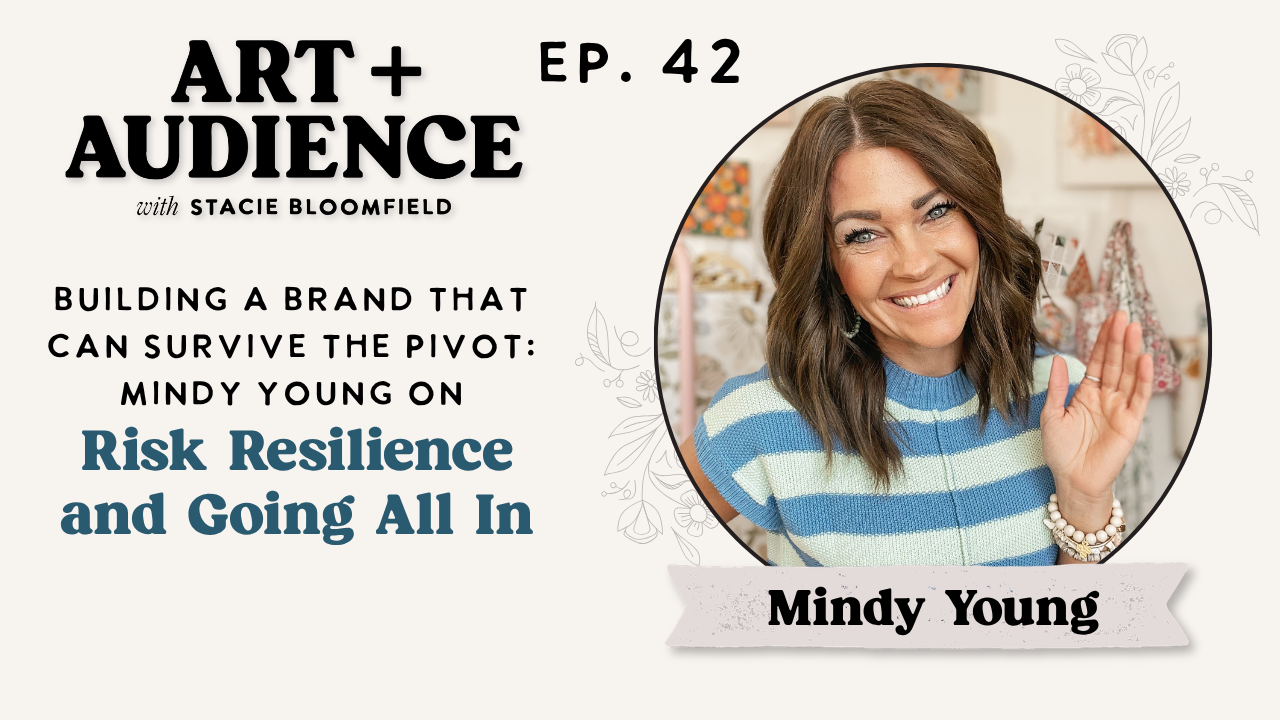
In this episode, Stacie Bloomfield sits down with Mindy for a candid conversation about what it really takes to build a sustainable creative business. Mindy shares how she started designing in 2016, grew a multiple six-figure business on Spoonflower, and then hit a major turning point when platform changes forced her to rethink everything. Together, Stacie and Mindy unpack the hard but necessary pivots that come with building a business on someone else's platform, the mindset required to keep going when things feel uncertain, and why artists who want to grow must move from hobbyist thinking into true business ownership. This episode is honest, energizing, and full of wisdom for any artist ready to go all in.
RESOURCES MENTIONED IN THIS EPISODE:
- Indy Bloom Design — Mindy's surface pattern design and wallpaper brand. A vivid example of niching down and owning a specific customer deeply.
- @indybloomdesign on Instagram — Where Mindy shares her patterns, wallpaper designs, and business journey.
- Marketing Calculator — The free tool Stacie references in this episode that shows exactly why owning your email list is one of the most valuable things you can do as an artist.
- Side Hustle Society — The community Stacie built for artists navigating exactly the kind of business decisions Mindy talks about in this episode. Waitlist is always open.
HERE ARE THE 5 KEY TAKEAWAYS FROM THIS EPISODE:
1️⃣ Platforms Are Launchpads — Not the Final Destination
Mindy Young built a multiple six-figure business on Spoonflower — one of the best platforms available for surface pattern designers. And then Spoonflower changed its policies, customer communication became limited, and the income that had felt stable suddenly wasn't. This is the risk every artist takes when they build primarily on a platform they don't control.
The lesson isn't to avoid platforms like Spoonflower, Etsy, or any third-party marketplace — they are genuinely powerful places to start. The lesson is to treat them as the beginning, not the destination. Use the platform to find your audience and validate your work. Then build direct relationships — an email list, your own website, your own brand — that don't depend on any algorithm staying the same. Mindy's wake-up call came when her husband had already left his job to work in the business full time. Their family was depending on that income. Changes outside their control had very real consequences.
That is the moment most artists hope never arrives. The ones who land on their feet are the ones who started building something they owned alongside the platform work — not after it was already too late.
2️⃣ The Shift from Hobbyist to Business Owner Changes Everything
Mindy is clear-eyed about this in the conversation: there is a distinct difference between creating beautiful things and running a business. At some point, if you want your art to support your life and your family, you have to make a decision. You have to get serious about who you are serving, what they want, and how your work fits into their world.
Hobbyist thinking is reactive — you make art and see what happens. Business owner thinking is proactive — you make art, decide where it goes, who it's for, how it's priced, and how it grows. That shift is harder than it sounds. Most artists start in hobbyist mode. It becomes a ceiling when the business is ready to grow but the mindset isn't. Mindy's story is a vivid example of what's on the other side: a business that can survive change because it's built on decisions, not just hope.
Stacie Bloomfield built Leverage Your Art specifically to help artists make this transition — to move from making things and hoping to making things and deciding.
3️⃣ Data-Driven Pivots Beat Emotional Ones
When Mindy's Spoonflower income dropped, she didn't guess at her next move. She looked at her existing sales data — what had sold best, what customers were actually responding to, what patterns were showing up in customer photos and social tags. That research led her directly to wallpaper.
Her ideal customer, she discovered, was decorating little girls' rooms and nurseries. That clarity changed everything. Rather than trying to be everything to everyone, Mindy leaned into a niche. She refined her visual brand around one specific customer and committed to creating mockups that felt different from what everyone else was doing. The data told her where to go. Her creative voice determined how to get there.
This is one of the most important things Mindy talks about in the episode: success is not just about choosing a product. It is about choosing a product that works with your artistic voice and with the market you want to reach. Study the data. Pay attention to what sells. Then find a way to meet the market in a way that still feels true to you.
4️⃣ $500 to $20,000 in Eight Months: What Consistency Actually Looks Like
Mindy's first month selling wallpaper on her own brought in just $500. After the larger numbers she had seen on Spoonflower, that felt discouraging. But she stayed consistent. She kept speaking to the right customer. She kept showing up.
Within eight months, Indy Bloom had its biggest month ever — over $20,000 in sales. That is not luck. That is what happens when someone identifies the right niche, commits to it fully, and refuses to quit before the compound curve turns. The early months are always the hardest. Results feel invisible. But Mindy's story is proof that the reps you are doing now matter, even when you cannot see the effect yet.
Mindy describes the pivot as one of the hardest things she has ever done. There were seasons where she felt crushed by the pressure and the uncertainty. She talks about the impostor syndrome of watching her business dip after years of success. But instead of staying on the floor, she made a decision to figure it out — not to pretend things were easy, but to refuse to stay stuck and ask what the next right step was.
5️⃣ Alignment Is the Secret to Staying Power
One of the most memorable ideas from this episode is Mindy's belief that artists burn out when they try to force themselves to sell products that don't actually fit who they are, what they love, or where their style belongs. Going all in doesn't mean chasing any product that sells. It means going all in on the intersection of what the market wants and what you genuinely create well.
For Mindy, that has meant creating trendy, relevant work while keeping the distinct Indy Bloom feel intact. She studies the market and pays attention to customer preferences — then turns inward so she can create from a place of confidence instead of comparison. That discipline is what makes her work sustainable rather than exhausting.
Mindy encourages artists to act like they are the only person in the world selling what they sell. That conviction changes how you market, how you communicate, and how long you are willing to keep going before results show up. Her story proves that consistency and commitment matter more than quick wins — and that the artists who build lasting businesses are almost always the ones who stayed in the game long enough for things to compound.
MORE FROM MINDY YOUNG
Find Mindy and her work here:
🌐 Website: indybloomdesign.com
📸 Instagram: @indybloomdesign
SUBSCRIBE & REVIEW THE ART + AUDIENCE PODCAST
If this episode sparked something for you, the best way to support the show is to subscribe and leave a review on Apple Podcasts. It takes 30 seconds and helps other artists find us. New episodes drop every week. Subscribe so you never miss one — and if this sounds like something a creative friend needs to hear, share it with them.
Frequently Asked Questions About Pivoting Your Art Business
What should you do when the platform you built your art business on changes?
Use your existing data before making any moves. Mindy Young did exactly this — she looked at what had sold best, what customers were responding to, and where the biggest opportunities were, then pivoted to wallpaper based on the evidence. Platforms can and do change; the artists who recover fastest are the ones who already have direct customer relationships — an email list, their own website — that don't depend on any single platform staying the same.
How do you transition from hobbyist thinking to business owner thinking as an artist?
Start making intentional decisions about your work instead of just seeing what happens. Hobbyist thinking is reactive — you create and hope. Business owner thinking is proactive — you create, decide where it goes, who it's for, how it's priced, and how it grows. The shift starts with one decision: to take your creative work seriously as a business. Stacie Bloomfield's Leverage Your Art course is built specifically to help artists make this transition.
How do you find your niche as a surface pattern designer?
Look at your existing sales data first. Mindy Young didn't guess at her niche — she studied what was already selling, looked at customer photos and social tags to understand who was buying, and followed the evidence. That research told her her ideal customer was decorating little girls' rooms and nurseries. From there, she refined her brand around that specific customer and committed fully. Data shows you where to go. Your creative voice determines how to get there.
About Stacie Bloomfield
Stacie Bloomfield is the founder of Gingiber, a surface pattern design and art licensing brand she built from her dining room table into a multimillion-dollar business with products in 1,400+ brick-and-mortar stores. She has earned $500K+ through art licensing and has taught 5,000+ artists how to build real income from their work.
She is the author of The Artist's Side Hustle (Hay House), a Moda fabric designer, and the host of the Art + Audience podcast. Her programs — including Side Hustle Society, Leverage Your Art, and the Art Licensing Pitch Playbook — help artists at every stage turn their creativity into consistent income.
StacieBloomfield.com needs the contact information you provide to us to contact you about our products and services. You may unsubscribe from these communications at anytime. See our privacy policy for terms and conditions and to learn how we protect your data.