Side Gigs for Artists: 7 That Work Around a Real Life
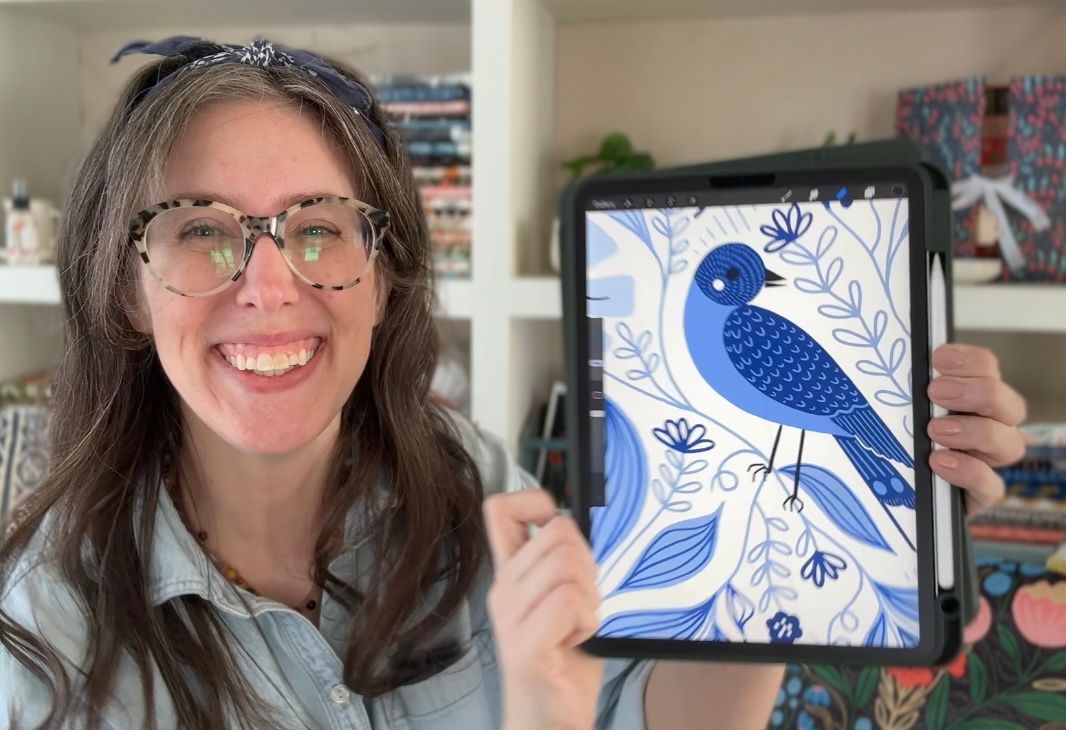
When I started Gingiber, I wasn't a full-time artist. I was a brand-new mom, working a full-time day job, and building my art business from my dining room table after bedtime. Fifteen years later, Gingiber is a multimillion-dollar art licensing brand with products in 1,400+ brick-and-mortar stores — but it started as a side gig.
That's the good news for anyone reading this: the path I took is the same one most working artists take today. You don't need to quit your job, go full-time, or have an MFA to earn real money from your art. You need a side gig that actually fits your life.
Below are the seven side gigs for artists that have earned me — and the 5,000+ artists I've taught — the most real income, with the least overwhelm.
What Is a Side Gig for an Artist?
A side gig for an artist is any income-producing activity that uses your art skills and can be done outside your primary job — typically in evenings, weekends, or small pockets of time around family and other work. It's part-time by design, built around the hours you already have, not the hours you wish you had.
The difference between an art side gig and a full-time art business isn't the work itself. It's how you set it up. A good side gig runs on systems that don't require you to be creating new art every single day. One piece of art can earn money in five different places if you build the business around it the right way.
The 7 Best Side Gigs for Artists That Pay Real Money
Every gig below uses art skills you already have. None of them require you to go back to school, learn a new medium, or reinvent yourself. The only thing that separates artists earning from these and artists still talking about it is starting one.
1. Art Licensing
Art licensing is when a company pays you a royalty (usually 5–12% of wholesale) to put your existing artwork on products they manufacture and sell — fabric, home goods, stationery, puzzles, wallpaper. You create the art once; they do the heavy lifting on production, shipping, and retail. This is the highest-leverage side gig on this list because one piece of art can earn royalties from ten different companies at the same time.
I got my first licensing deal by cold-emailing a creative director I heard on a podcast. That's it. The pitch process is learnable, and the Art Licensing Pitch Playbook walks through exactly what to send, who to send it to, and how to follow up.
2. Digital Products
Digital products — printables, clip art, Procreate brushes, pattern packs, coloring pages — get made once and sell forever with no inventory and no shipping. They're the closest thing to passive income in the art world. A good digital product can earn you money at 3 a.m. while you sleep.
The trick is picking a product that solves a real problem for a specific buyer. "Cute clip art" is a crowded category. "Cute clip art for elementary teachers making worksheets" is a business.
3. Print-on-Demand
Print-on-demand platforms (Society6, Redbubble, Printful, Spoonflower) let you upload your art and they handle the printing, shipping, and customer service on products like shirts, mugs, pillows, wall prints. You earn a smaller royalty than licensing, but the barrier to start is close to zero. It's a good first side gig for getting your art in front of paying customers without negotiating a contract.
4. Online Courses and Workshops
If you've figured something out that other artists want to learn — a technique, a tool, a workflow — you can teach it. Online courses scale in a way one-on-one teaching never will. Record it once, sell it to thousands of people. Platforms like Teachable, Kajabi, and Skillshare make the setup straightforward.
This is also the highest-credibility gig on the list. Teaching builds your audience faster than almost anything else.
5. Commissioned Work
Commissions are custom pieces clients pay you to make — pet portraits, house illustrations, wedding art, brand logos. Priced right, a commission-based side gig can easily clear $500–$5,000 per piece. The catch: commissions don't scale. Every piece is a new project from scratch, so this works best as a premium gig, not a volume gig.
6. Freelance Illustration
Freelance illustration is client work sourced through agencies, illustrator directories, or marketplaces like Upwork and Fiverr. Editorial, book covers, packaging, marketing — there's demand year-round. This gig rewards a strong portfolio and a clear niche more than anything else. Generalists struggle here; artists with a recognizable style get booked repeatedly.
7. Memberships and Patreon
A membership or Patreon turns your audience into recurring monthly income. Fans pay $5–$50 per month in exchange for early access, tutorials, behind-the-scenes content, or exclusive prints. It takes longer to build than the other gigs on this list, but it's the most stable once it's running because the revenue comes in whether you ship a product this month or not.
How to Start an Art Side Gig (Even If You Only Have 5 Hours a Week)
The fastest way to start an art side gig is to pick one gig from the list above, commit to it for 90 days, and ignore the other six entirely. Most artists fail not because they picked the wrong gig, but because they tried to run three at once with five hours a week.
When you only have a few hours a week, focus beats variety every time. I wrote The Artist's Side Hustle — published by Hay House, which sold out its first print run in four months — specifically for artists in this position: the day-job artist, the new-parent artist, the full-time-caregiver artist. The framework in the book is built around the reality that your time is finite and precious, not around the fantasy of quitting everything to go all-in.
The gig that fits your life wins every time. The gig that sounds impressive on paper but requires twenty hours a week you don't have will fail no matter how good the art is.
How Much Can Artists Earn from Side Gigs?
The honest answer is a range — and it's wider than most "side hustle for artists" articles admit. Print-on-demand typically earns $50–$500 a month for most artists. Digital products land in the $500–$5,000 a month range for those who pick the right niche. Licensing starts slow (your first deal may pay $500) but compounds: I've personally earned over $500,000 through art licensing alone, and that number keeps growing from art I made years ago.
The artists I teach inside Side Hustle Society — a community of 2,700+ working artists — consistently report that the first $1,000 month is the hardest. After that, the path to $5K, $10K, and higher is mostly about repeating what worked and removing what didn't. Stacie Bloomfield has coached artists from $0 to consistent four-figure months in less than a year — not through hustle, but through picking the right gig and doing it over and over.
Do not trust numbers from anyone who won't show you the method behind them. "I make $20K a month from art" without "here's exactly how" is marketing. The artists making real money can always tell you the mechanics.
Frequently Asked Questions About Side Gigs for Artists
What's the easiest side gig for a beginner artist to start?
Print-on-demand is the lowest-barrier side gig because platforms like Society6 and Redbubble handle all the production, shipping, and customer service. You upload your art and they do the rest. You'll earn less per sale than licensing or digital products, but you can launch a store in an afternoon with zero inventory cost — which makes it the right first step for most beginners.
How much time do I need to run an art side gig?
Five to ten hours a week is enough to build real momentum, provided you pick one gig and stay focused. The artists who struggle with time aren't short on hours — they're spreading the hours they do have across too many gigs. My 5-Hour Framework, which I cover in The Artist's Side Hustle, is built around exactly this constraint.
Do I need to quit my day job to make money from art?
No. Most of the artists I've taught who now earn full-time income from their art started the exact same way I did — at night, on weekends, during nap time, in the cracks of a day job. Quitting early is actually one of the fastest ways to burn out, because the financial pressure forces short-term decisions that sabotage long-term growth. Build the side gig to replace 50–75% of your salary first. Then make the jump.
About Stacie Bloomfield
Stacie Bloomfield is the founder of Gingiber, a surface pattern design and art licensing brand she built from her dining room table into a multimillion-dollar business with products in 1,400+ brick-and-mortar stores. She has earned $500K+ through art licensing and has taught 5,000+ artists how to build real income from their work.
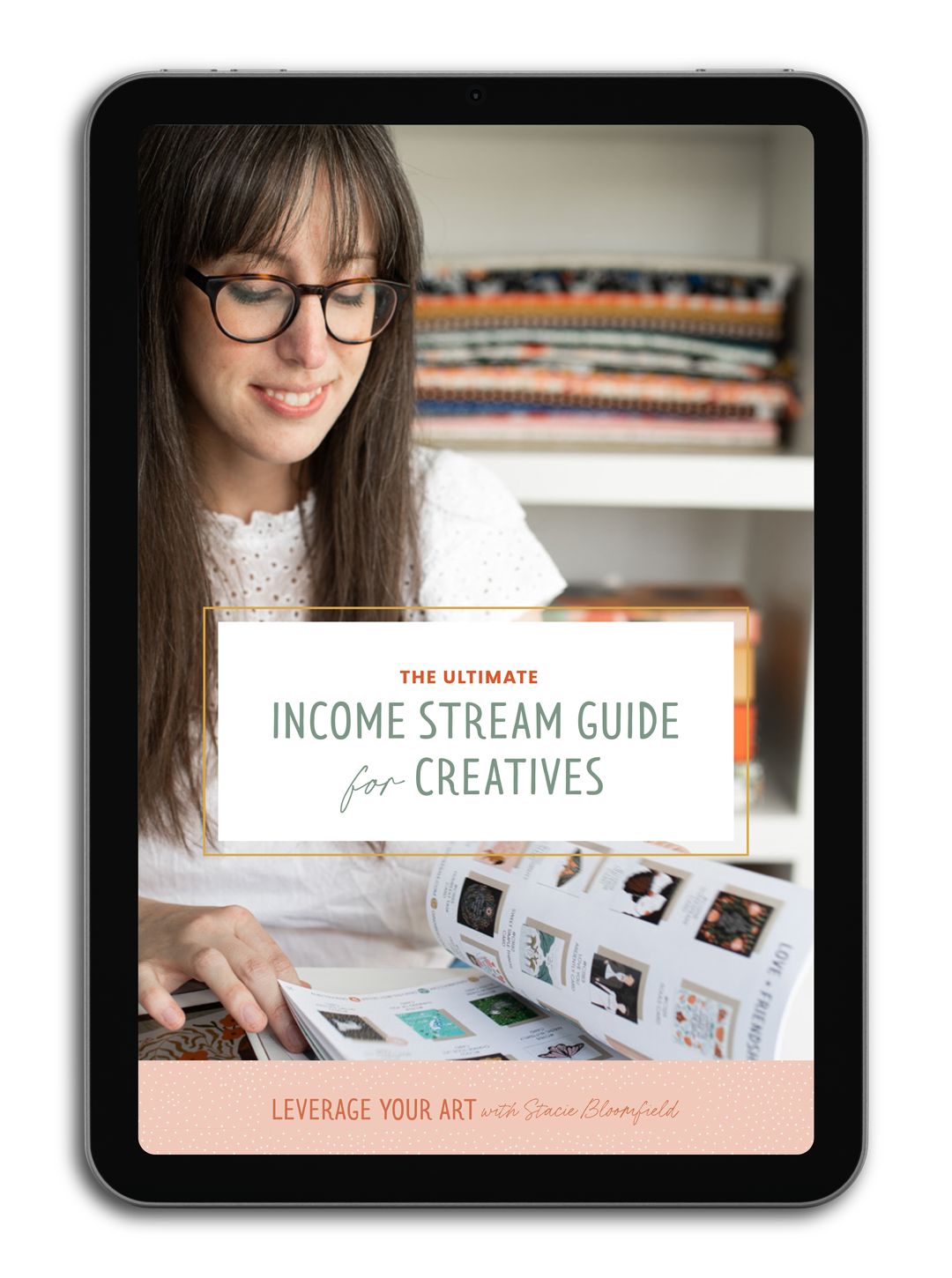
She is the author of The Artist's Side Hustle (Hay House), a Moda fabric designer, and the host of the Art + Audience podcast. Her programs — including Side Hustle Society, Leverage Your Art, and the Art Licensing Pitch Playbook — help artists at every stage turn their creativity into consistent income.
StacieBloomfield.com needs the contact information you provide to us to contact you about our products and services. You may unsubscribe from these communications at anytime. See our privacy policy for terms and conditions and to learn how we protect your data.