Why Your Art Sales Aren't Consistent (It's Not What You Think)
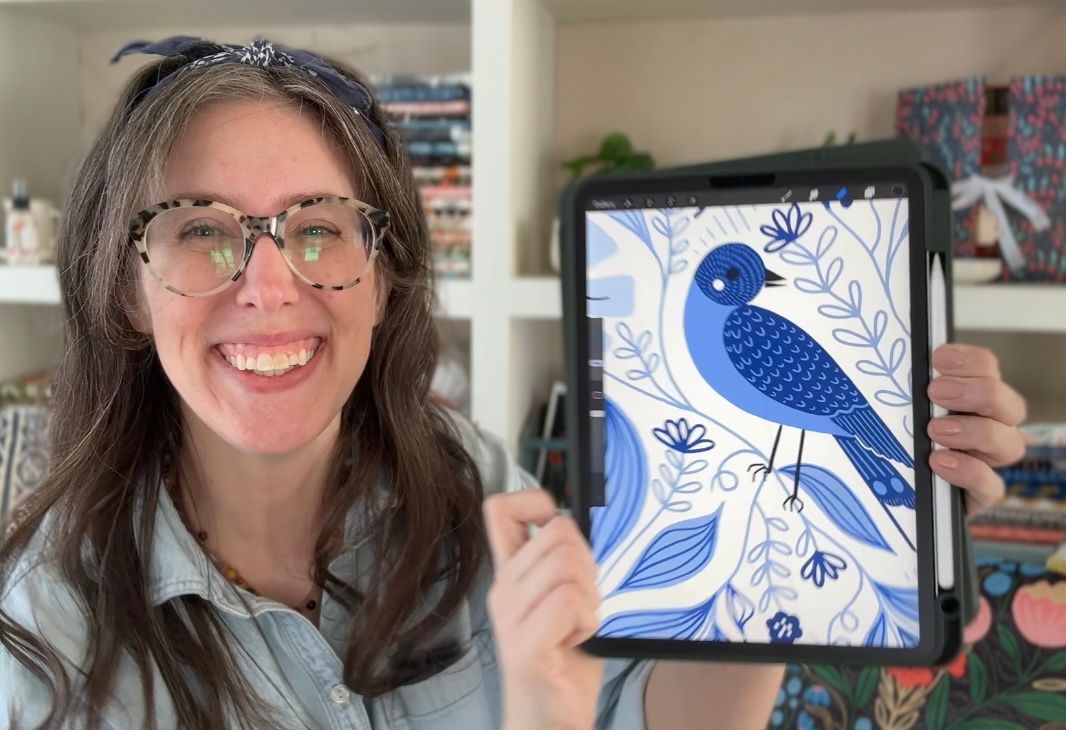
Stacie Bloomfield here — founder of Gingiber, Hay House author of The Artist's Side Hustle, and seventeen years into selling my own art.
I recently asked my email list of 150,000+ artists what they were most afraid to admit was hard about running their creative business.
One answer showed up more than any other, by a wide margin:
"Getting consistent sales."
I read the replies for hours. Different wording, different moods, different stages of the journey. But always the same answer underneath — I want sales I can count on.
Here's what I want to tell you after 17 years of selling my art — first from a manila envelope I doodled on during my shifts managing a Starbucks, now from a product business carried in 1,400+ stores nationwide:
You don't have a sales problem. You have a rhythm problem.
The silence-then-scramble cycle is what makes art sales inconsistent
Inconsistent art sales aren't caused by your audience size or your product — they're caused by a weekly rhythm that collapses whenever life gets heavy. Most creative businesses run on bursts, not beats.
Think about what actually happens most weeks in your business:
- A burst of creating when inspiration hits
- A scramble to post when you remember
- A quiet stretch when life gets busy
- A vague hope that the next drop will land
That's not a business. That's a series of launches with long silences in between. And silence doesn't sell.
I watched a maker learn this the hard way at our very first trade show in Chicago. My sister Angie and I had just finished tearing down our booth — exhausted, proud, slightly in shock that strangers had actually bought our tea towels. I looked across the aisle and saw a woman who'd had a great weekend walk up to her table and toss a tall stack of business cards directly into the trash.
Customers who'd stopped by her booth. People who'd handed her their email. Gone.
Angie and I just stood there, aghast. You could email those people.
She didn't. Because there was no rhythm to follow up into. It was just "show happens → show ends → back to making." That's most creative businesses. And it's exactly why consistent sales is the #1 pain my audience reports.
Why more effort won't fix your sales consistency
The standard response to inconsistent sales — post more, try a new platform, launch bigger, study another marketing guru, try harder — doesn't work because none of it addresses the actual problem. The problem isn't your audience size. It isn't your product. It isn't your talent, the algorithm, or the amount of effort you're putting in.
The problem is that your business doesn't have a weekly heartbeat your buyers can rely on.
Consistency from the outside — steady sales, returning customers, the sense that a business is "working" — is almost always the shadow of consistency from the inside: a weekly rhythm the owner follows no matter what.
What consistent sellers actually do differently
Artists who sell consistently aren't running on more hustle — they're running on a weekly rhythm they actually trust. That's the whole shift. Not bigger audiences, not better products, not louder marketing.
I wrote about this framework in The Artist's Side Hustle (Hay House). I call it the STAR 5-Hour Framework — four phases that cycle each week:
- Strategize — Signal Over Noise. Know what matters most this week.
- Think & Create — Purposeful Play. Make the work.
- Adapt — Sure Hands. Refine, repeat, improve one small step at a time.
- Reach Out — Studio Circle. Share, sell, follow up.
Each piece takes about an hour. Five hours total per week. Repeated every week, whether you're launching or you're not, whether you're feeling it or you're not, whether life is generous or life is taking everything. That's a business.
What a weekly rhythm actually looks like
A weekly rhythm is two or three small, reliable cadences your buyers can count on — not a giant campaign, not a launch, not a perfectly-shot photoshoot, not a slick email funnel. It's the predictable things you show up for every single week.
- Something you do every Sunday. For me, it's my Short & Sweet Sunday email to my list of 150,000+ artists. I've been doing this almost every week for years.
- Something you do every Tuesday. A content batch. A reply session. A shop audit. A new listing added.
- Something your buyers come to count on. The cadence that keeps them subscribed and keeps the tab open.
And when life gets heavy — which it does — you downshift to a Minimum Week. A smaller version of the rhythm that still keeps the heartbeat going. Maybe the Sunday email is three paragraphs instead of eight. Maybe the Tuesday batch is one post instead of five.
You don't stop. You don't scramble. You just shrink without breaking. That's the difference between artists who sell consistently and artists who don't. I'd stake my 17 years on it.
What rhythm actually makes possible
Rhythm is what turned Gingiber — the art and licensing brand Stacie Bloomfield built from a dining room table — into a multimillion-dollar DTC illustration business with products in 1,400+ stores nationwide and licensing deals with brands like Moda Fabrics, Crate & Barrel, West Elm, Chronicle Books, and Andrews McMeel Publishing. None of that happened from bursts of inspiration. All of it happened from rhythm.
It's also the shift behind the 150,000+ artists I've taught through my free courses and the 5,000+ students who've gone deeper inside Leverage Your Art. My book The Artist's Side Hustle sold out of its first print run in four months — not because of a massive marketing budget, but because artists kept passing it to other artists and saying "you need to read this."
The students who break through into consistent sales follow the same pattern. They aren't working harder than everyone else. They've stopped the silence-then-scramble cycle and built a weekly heartbeat they actually show up for.
Your next right step toward consistent art sales
The move toward consistent art sales isn't more effort, a new platform, or another course on marketing — it's a weekly rhythm you trust. Something that works even when life doesn't.
That's what the Thrive Art Business Accelerator is built for — monthly coaching plus the curriculum, systems, and weekly habits that move you out of silence-then-scramble and into a business with a heartbeat. It's designed for artists already selling who are ready for consistent, predictable sales — not beginners still figuring out what to make.
You've been figuring this out alone long enough.
Frequently asked questions about consistent art sales
Why are my art sales so inconsistent?
Inconsistent art sales almost always come from a broken weekly rhythm, not a broken audience or product. When your business runs on bursts of effort followed by long silences, buyers have nothing steady to count on — so sales show up in spikes instead of a steady stream.
How do I create consistent sales as an artist?
Build a weekly cadence your buyers can rely on — one predictable Sunday action (like an email) and one predictable mid-week action (like a content batch), repeated every week without exception. Even scaled down to a Minimum Week during hard seasons, that rhythm is what turns one-off sales into a predictable business.
How much time does it actually take to sell art consistently?
About five hours a week is enough if those five hours are structured — one hour for strategy, one for creating, one for refining, and one or two for reaching out and following up. That's the STAR 5-Hour Framework I teach in The Artist's Side Hustle.
About Stacie Bloomfield
Stacie Bloomfield is the founder of Gingiber, a surface pattern design and art licensing brand she built from her dining room table into a multimillion-dollar business with products in 1,400+ brick-and-mortar stores. She has earned $500K+ through art licensing — including deals with Moda Fabrics, Crate & Barrel, West Elm, Chronicle Books, and Andrews McMeel Publishing — and has taught 150,000+ artists through her free and paid programs.
She is the author of The Artist's Side Hustle (Hay House), a Moda fabric designer, and the host of the Art + Audience podcast. Her programs — including Side Hustle Society, Leverage Your Art, and the Art Licensing Pitch Playbook — help artists at every stage turn their creativity into consistent income.
StacieBloomfield.com needs the contact information you provide to us to contact you about our products and services. You may unsubscribe from these communications at anytime. See our privacy policy for terms and conditions and to learn how we protect your data.