
Carrie Cantwell on Building Confidence, Facing Rejection, and Finding Your Voice
🎧 Listen to this episode: Apple Podcasts
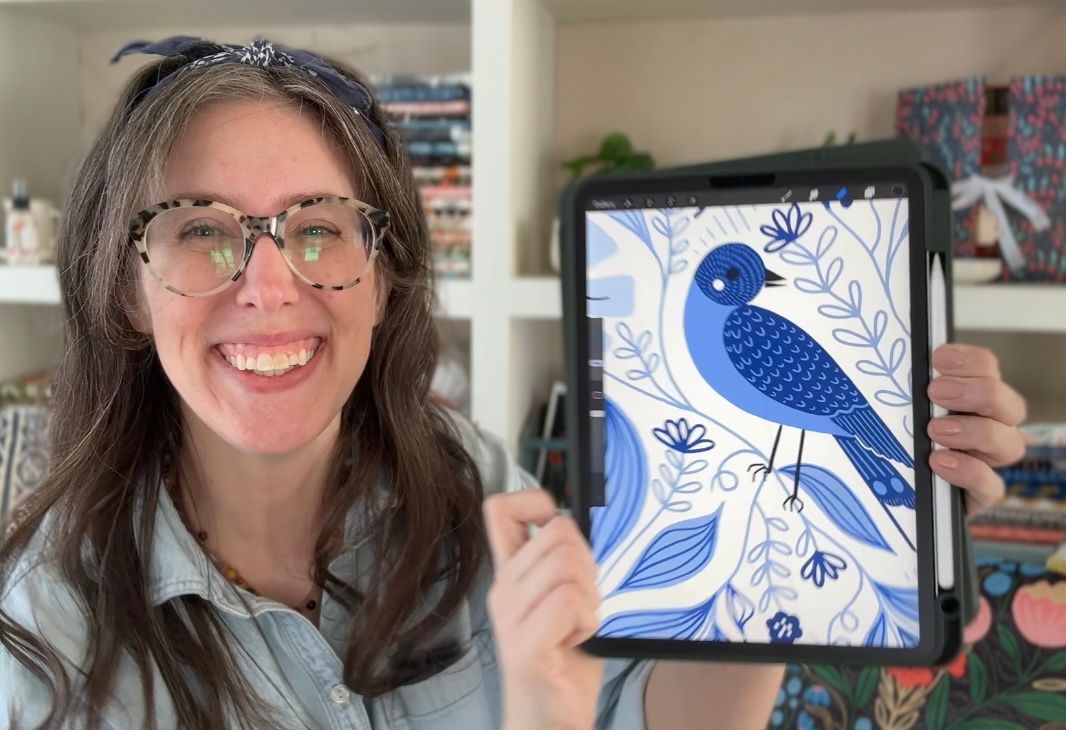
Carrie Cantwell has licensed her work with Target and Pottery Barn, been featured in NPR's All Things Considered and UPPERCASE Magazine, and built a career as an illustrator, surface designer, and educator — all while being someone who had to learn, the hard way, that confidence doesn't come first. Action does.
In this episode of Art + Audience, Stacie Bloomfield sits down with Carrie to talk about the messy, honest reality of building a creative business: the rejections that stung, the voice that took years to find, and the mindset shifts that made it possible to keep going anyway. If you've ever held back because you didn't feel ready, this one is for you.
This conversation is full of the kind of truth that doesn't make it into highlight reels — which is exactly why it matters.
RESOURCES MENTIONED IN THIS EPISODE:
- carriecantwell.com — Carrie's portfolio, coaching, and resources for illustrators and surface designers.
- @carriecantwellart on Instagram — whimsical, joyful work and behind-the-scenes from Carrie's studio.
- Art Licensing Pitch Playbook — if this episode fired you up about pitching, this is the next step: a guide to reaching the right companies with the right message.
HERE ARE THE 5 KEY TAKEAWAYS FROM THIS EPISODE:
5️⃣ Resilience is the skill that keeps artists in the game. The artists who build lasting careers aren’t the most talented — they’re the ones who kept going after the hard seasons, the rejections, and the slow stretches.
4️⃣ What makes you licensable is what makes you distinct. Generic work gets ignored. Manufacturers are looking for something that stands out on a shelf — which means the quirks and specificity in your style are assets, not liabilities.
3️⃣ Your artistic voice develops through volume and time. You can’t think your way into a distinct voice — you have to make your way there. The more you create, the clearer your instincts become.
2️⃣ Rejection is information, not a verdict. Every no is data. Carrie reframes rejection as part of the research process — something that refines your direction rather than defines your worth.
1️⃣ Confidence is built through action, not before it. Waiting until you feel ready is a trap — confidence comes from doing the thing, pitching the client, sharing the work, and surviving the discomfort of being seen.
Confidence Is Built Through Action, Not Before It
Building confidence as an artist doesn't happen by waiting until you feel ready — it happens by doing the thing before you're ready and discovering that you survived. Carrie is direct about this: she was not confident when she started. She got confident by shipping work, facing feedback, and doing it again.
This is one of the most common traps artists fall into — treating confidence as a prerequisite instead of a result. The artists who break through aren't the ones who felt sure of themselves. They're the ones who moved anyway. The feeling followed the action, not the other way around.
If you're waiting to feel ready before you pitch, share your work, or reach out to a client — that moment isn't coming. The confidence you're waiting for is on the other side of the thing you're afraid to do.
Rejection Is Information, Not a Verdict
Rejection in art licensing is not a judgment on your talent or your worth as an artist — it is product feedback, market timing, or a mismatch between your work and a company's current direction. Carrie has been rejected. Stacie Bloomfield has been rejected. Every artist who has ever pitched has been rejected.
What separates the artists who keep going from the ones who quit isn't a better success rate — it's a different relationship with the no. When you stop treating rejection as proof that you don't belong and start treating it as data, you can actually use it. You can adjust your pitch. You can try a different company. You can notice patterns.
The rejection rate in licensing is high. That's not a personal message. It's just how the industry works — and the artists who know that walk back to their desk and try again.
Your Artistic Voice Develops Through Volume and Time
Finding your artistic voice is not a revelation that arrives one morning — it's something that accumulates over hundreds of pieces of work, most of which you'll never show anyone. Carrie is honest about the fact that her distinctive style didn't appear fully formed. It emerged over time, through making a lot of work and paying attention to what kept showing up.
This is the part no one tells you: your voice is already in there. It shows up in what you're drawn to draw, the color palettes you return to, the subjects that energize you. But you can't think your way to it. You have to make your way to it. The volume matters — not because quantity beats quality, but because you can't edit something that doesn't exist yet.
Give yourself permission to make work that isn't quite right yet. Your voice is developing even when the work isn't there yet.
What Makes You Licensable Is What Makes You Distinct
The thing that makes your work attractive to licensing clients is the same thing that makes it feel unmistakably yours — a consistent style, a clear point of view, a body of work that a buyer can immediately recognize and slot into their product line. Carrie's work is whimsical and joyful, and that consistency is what makes it easy for brands to say yes.
Generic work is hard to license because it's hard to differentiate. Buyers aren't looking for "good art" — they're looking for a look that fits their brand and will resonate with their customers. The more clearly defined your style, the easier you make their job. Your distinctiveness is your commercial advantage, not a liability.
Stacie Bloomfield built Gingiber into a brand that generates $2M+ per year in large part because the work has a recognizable identity. That identity is what gets you in the door and keeps you there.
Resilience Is the Skill That Keeps Artists in the Game
The artists who build lasting careers in licensing aren't necessarily the most talented ones — they're the ones who showed up consistently over years, absorbed the hard parts, and didn't let a slow season or a string of rejections become their story. Resilience is a skill, and like any skill, it develops with practice.
Carrie talks about this with the kind of honesty that only comes from having actually lived through it. The doubt is real. The comparison is real. The days when it doesn't feel worth it are real. And so is the decision to keep going anyway.
If you've taught 5,000+ artists to build income from their art, as Stacie has, the pattern is unmistakable: the ones who make it aren't the ones who had it easier. They're the ones who decided early that quitting wasn't an option.
MORE FROM CARRIE CANTWELL
Find Carrie and her work here:
🌐 Website: carriecantwell.com
📸 Instagram: @carriecantwellart
SUBSCRIBE & REVIEW THE ART + AUDIENCE PODCAST
If this episode sparked something for you, the best way to support the show is to subscribe and leave a review on Apple Podcasts. It takes 30 seconds and helps other artists find us. New episodes drop every week. Subscribe so you never miss one — and if this sounds like something a creative friend needs to hear, share it with them.
Frequently Asked Questions About Building Confidence as an Artist
How do you build confidence as an artist?
Building confidence as an artist happens through action, not before it. The most effective path is to consistently make and share your work — even before you feel ready. Confidence is the byproduct of doing hard things and surviving them, not the prerequisite. Start small, ship work regularly, and let the evidence of your output build the belief that you can do this. If you’re ready to build a more intentional art business, The Artist’s Side Hustle by Stacie Bloomfield is a great place to start.
How do you handle rejection in art licensing?
The most effective way to handle rejection in art licensing is to treat it as product feedback rather than a personal verdict. Most rejections are about timing, fit, or a company's current product direction — not the quality of your work. Keep a record of who you've pitched, follow up after 6–12 months, and adjust your pitch based on patterns you notice across multiple rejections. Stacie’s Art Licensing Collective is built for artists navigating exactly this stage.
How do you find your artistic voice?
Finding your artistic voice comes through volume and attention over time — not a single breakthrough moment. Make a large body of work across different subjects, palettes, and styles, and then look for what keeps showing up naturally. Your voice is in the patterns: the colors you return to, the subjects that energize you, the aesthetic choices that feel inevitable. You can't think your way to it — you have to make your way to it. Stacie’s Side Hustle Society is a community built to support artists developing their creative business.
StacieBloomfield.com needs the contact information you provide to us to contact you about our products and services. You may unsubscribe from these communications at anytime. See our privacy policy for terms and conditions and to learn how we protect your data.