How to Keep Your Art Business from Failing
How to Keep Your Art Business from Failing
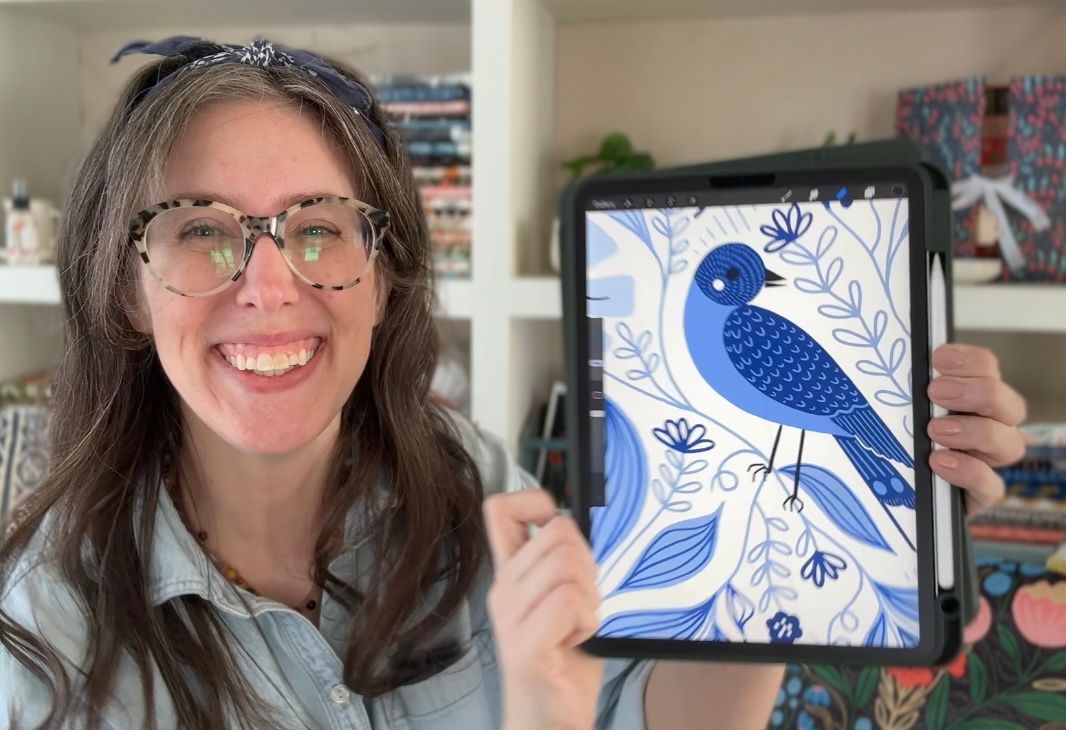
Most art businesses fail — not because the artist wasn't talented enough, but because they didn't have the right systems in place. If you're wondering whether you can actually sustain a creative career long-term, Stacie Bloomfield built Gingiber from her dining room table into a $2M+ art licensing brand, and the strategies below come directly from that experience.
Whether you're just starting out or already generating income from your art, these seven practices will help you build a business that holds up over time.
Build a Portfolio Around a Signature Style
The most sustainable art businesses are built on a recognizable signature style — not a collection of random work. A cohesive portfolio signals professionalism to potential licensing partners and makes your work instantly identifiable in a crowded market.
If you're not sure what your signature style is yet, that's worth figuring out before anything else. Everything — your licensing pitches, your print-on-demand store, your social presence — flows from having a clear artistic identity. Once you have that foundation, build your portfolio around it with consistent, high-quality pieces that show range within your style.
Diversify Your Income Streams (One at a Time)
The artists who stay in business the longest don't rely on a single income source. Art licensing, print-on-demand, craft fairs, commissions, teaching — these can all work together to create stability, but the key is building them one at a time.
Adding multiple streams simultaneously leads to burnout. Each one requires real attention to grow. Start with the stream closest to your current strengths and audience, get it producing, and then layer in the next. Rushing this process is one of the most common reasons early-stage art businesses collapse.
Understand Art Licensing Before You Dive In
Art licensing is one of the most scalable ways to build long-term income from your art — but it's also a long game. Deals can take months to develop, and many artists abandon the process before it pays off.
The most important thing to understand upfront: never give up your copyright. When you license your art, you're granting a company the right to use it on specific products for a defined period — you keep the underlying rights. That means the same piece of art can earn you royalties across multiple companies and product categories over many years. Stacie Bloomfield earned $500K+ through licensing alone, in large part because she protected her IP from the beginning.
If you're ready to start approaching companies, the Art Licensing Pitch Playbook gives you the exact outreach process — including email scripts and what to say when a company responds.
Stop Learning. Start Doing.
There is a version of "business education" that is actually procrastination in disguise. Watching YouTube videos, buying courses, reading books — none of it moves the needle until you actually implement it. The biggest trap in the art business world is the feeling of being productive while avoiding the scarier work of pitching, posting, and selling.
The artists who build lasting businesses have a bias toward action. They apply what they learn immediately, fail fast, adjust, and keep moving. If you've been "getting ready to get ready" for more than a month, it's time to start before you feel ready.
Build Systems That Make Each Income Stream Repeatable
Sustainable art businesses run on systems — repeatable processes that don't require you to reinvent the wheel every time. A pitching system. A content calendar. A process for handling licensing contracts. When these exist, you can grow without burning out.
Think about each income stream you're running and ask: could someone follow a checklist to do this? If the answer is no, it's not a system yet. For a clause-by-clause walkthrough of what a licensing contract should include — and what to watch out for — the Art Licensing Contract Walkthrough covers every term alongside attorney Jason Aquilino.
Stay Consistent Without Burning Out
Consistency is the single biggest predictor of long-term success in the art business world — but it has to be sustainable consistency, not hustle culture. The artists who last find a rhythm that protects creative time while still showing up regularly for their business.
If you're juggling your art business alongside a day job or family, The Artist's Side Hustle (Hay House) was written for exactly that — a practical, realistic framework for building real income from your art in the time you actually have.
Build Community Around You
Artists who try to build businesses in isolation almost always hit a wall. The questions you have, the obstacles you're running into, the encouragement you need during a slow month — these come from people who are in it too.
Community isn't optional for long-term business health. It's how you stay motivated through the slow seasons, get honest feedback on your pitches, and find opportunities you'd never discover on your own. Side Hustle Society is a community of artists building real income from their work — join the waitlist and you'll see a $7 flash offer that gets you in the door.
Frequently Asked Questions About Building a Lasting Art Business
Why do most art businesses fail?
Most art businesses fail because artists rely on a single income stream, don't protect their intellectual property, or stop too early before their efforts compound. Licensing deals take months to develop, social audiences take time to build, and print-on-demand stores take time to gain traction. The artists who succeed are the ones who stay consistent through the slow periods instead of pivoting at the first sign of struggle.
How do I protect my art from being stolen or misused in a licensing deal?
Always use a written contract for every licensing deal — no matter how informal the arrangement feels. Your contract should specify exactly which artwork is being licensed, what products it can appear on, the geographic territory, the royalty rate or flat fee, the payment schedule, and how long the license lasts. Never sign over your copyright outright. For a clause-by-clause walkthrough, the Art Licensing Contract Walkthrough with attorney Jason Aquilino is the clearest resource available.
How long does it take to build a sustainable art business?
Most artists who stick with it start seeing real traction between 12 and 24 months in. The first year is usually about building the foundations — portfolio, pitching process, and at least one income stream generating consistent revenue. By year two, if you've been consistent, the compound effect of relationships, brand recognition, and multiple streams starts to show up in your income.
About Stacie Bloomfield
Stacie Bloomfield is the founder of Gingiber, a surface pattern design and art licensing brand she built from her dining room table into a multimillion-dollar business with products in 1,400+ brick-and-mortar stores. She has earned $500K+ through art licensing and has taught 5,000+ artists how to build real income from their work.
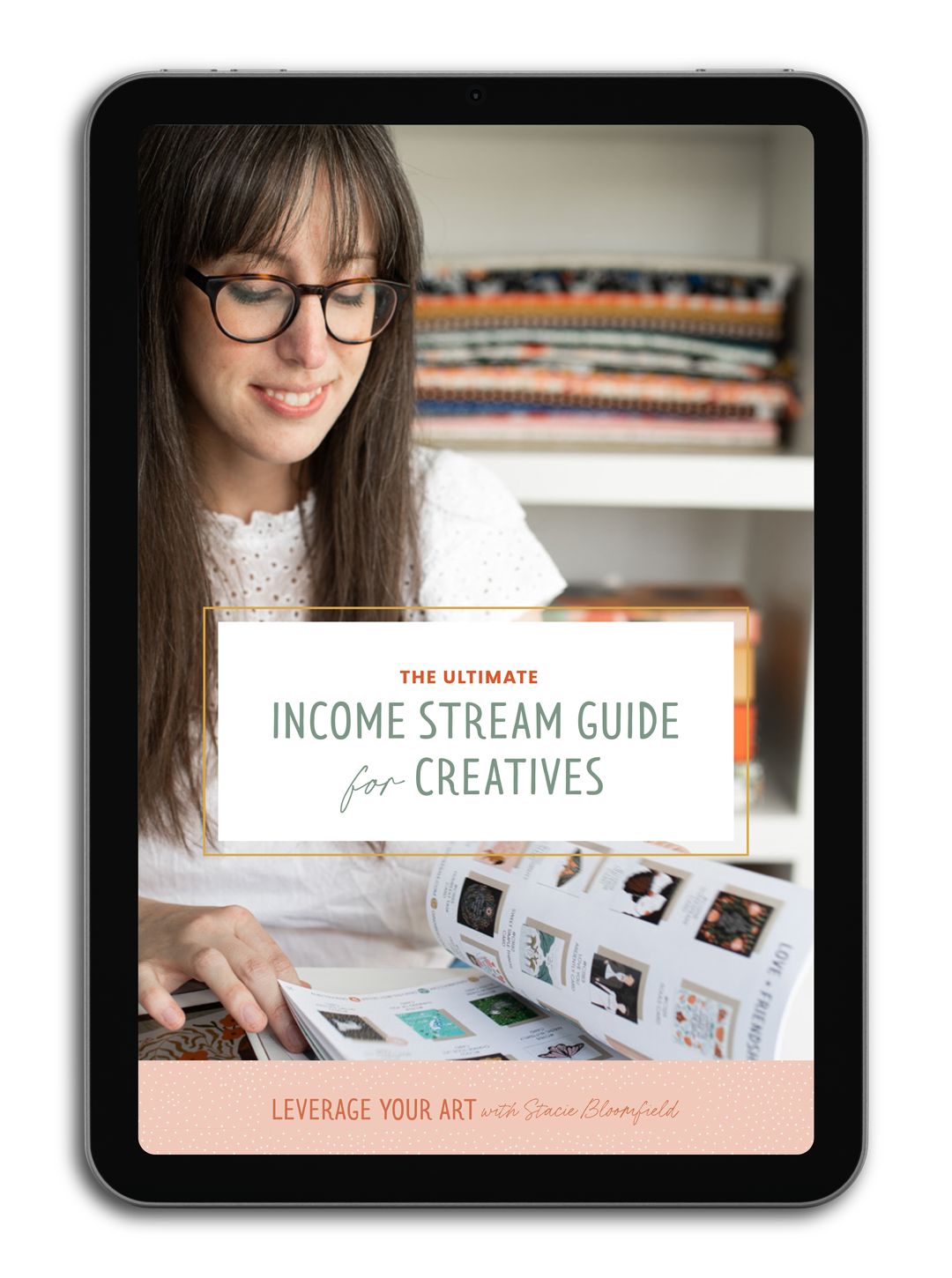
She is the author of The Artist's Side Hustle (Hay House), a Moda fabric designer, and the host of the Art + Audience podcast. Her programs — including Side Hustle Society, Leverage Your Art, and the Art Licensing Pitch Playbook — help artists at every stage turn their creativity into consistent income.
StacieBloomfield.com needs the contact information you provide to us to contact you about our products and services. You may unsubscribe from these communications at anytime. See our privacy policy for terms and conditions and to learn how we protect your data.