
Peggy Dean’s Secrets to Building a Loyal Creative Community
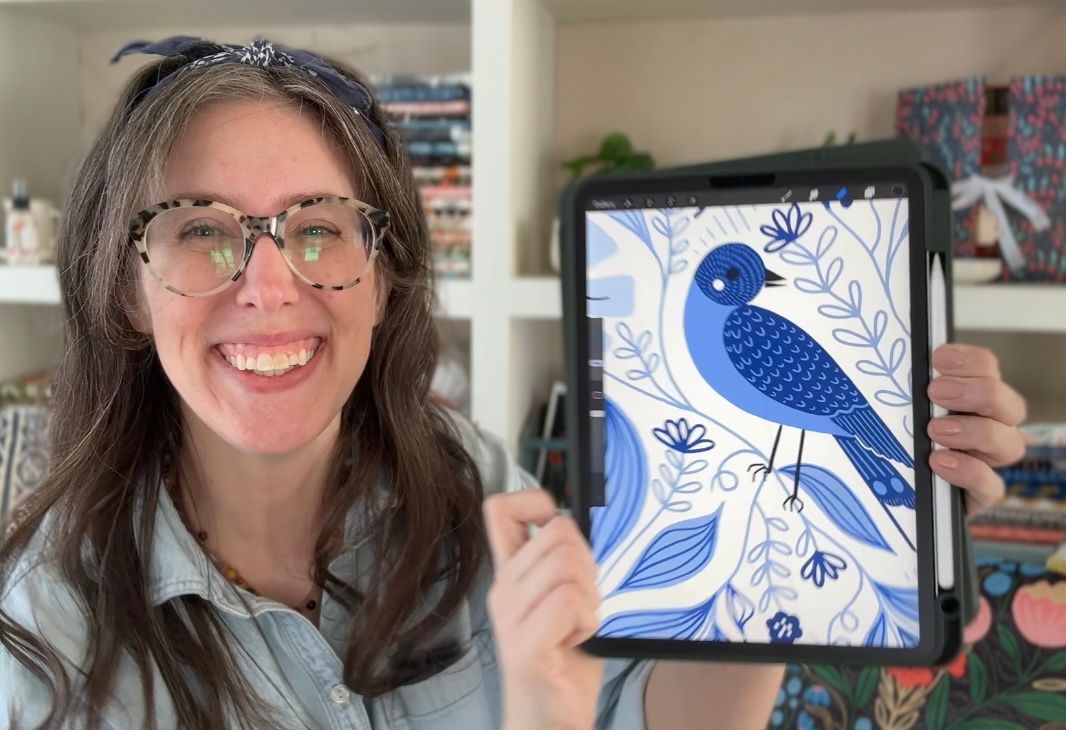
What does it actually take to build a community that sticks around — people who buy your work, share your content, and cheer you on for years? Peggy Dean, self-taught artist, Penguin Random House author, and founder of The Pigeon Letters, figured it out. And on episode 5 of the Art + Audience podcast, she broke down exactly how she did it.
Peggy didn’t start with a big platform or a polished brand. She started by being relentlessly, unapologetically herself — and that’s what people showed up for. If your creative business feels like it’s spinning its wheels, this episode has a lot to teach you. Here are the five biggest lessons from our conversation, broken down so you can apply them right now.
Stacie Bloomfield has watched this pattern play out across thousands of artists in her community: the ones who build lasting businesses aren’t the ones with the most followers. They’re the ones who are deeply clear on who they are and aren’t afraid to show it.
1. Trust Your Unique Path — Even When It Doesn’t Make Sense Yet
The most sustainable creative careers are built on following genuine curiosity — not chasing what seems to be working for someone else. Peggy Dean’s path looks nothing like a straight line. She moved from brush lettering to botanical illustration to watercolor to Procreate, following each interest wherever it led. And somehow, it all became coherent — because it was all her.
The temptation when you’re building an audience is to look around at what other artists are doing and try to replicate the formula. But audiences are remarkably good at detecting when someone is performing a persona versus actually living one. Peggy’s community followed her through every medium shift and pivot because they were following a person, not a style. That’s a fundamentally different kind of loyalty — and it doesn’t disappear when you try something new.
If your path has taken unexpected turns, if you’ve tried different things and shifted directions, that’s not a liability. That range of experience is often exactly what makes your perspective valuable and your content impossible for anyone else to replicate.
Here’s your takeaway: Your creative detours are features, not bugs. An audience worth building will follow the person — not just the portfolio.
Your action item: Write down three things about your creative path that feel “off-brand” or inconsistent. Then look for the thread that actually connects them. That thread is almost certainly your brand.
2. Authenticity Isn’t a Strategy — It’s What’s Left When You Stop Performing
Authenticity gets used so often it starts to sound meaningless. Peggy Dean makes it concrete: she simply stopped trying to be the version of herself she thought she was supposed to be online and started showing up as the version that actually existed.
That meant being honest about her mental health journey and how creativity became a lifeline for her. It meant not pretending to have a perfectly curated aesthetic when her real work was messier and more experimental than that. It meant talking about the hard parts alongside the wins. And people responded — not because vulnerability is a tactic, but because it’s recognizable. We share things that reflect our own experience, and a carefully polished “success only” feed rarely does that.
For artists building a business, this also matters practically. Content that feels real gets shared. A person who only shows the highlight reel eventually hits a ceiling because there’s nothing for their audience to actually connect to. Peggy’s willingness to show the full picture is a big part of why her community didn’t just follow — they stayed.
Here’s your takeaway: The things you’re most tempted to hide about your creative journey are often exactly what your audience most needs to hear.
Your action item: Choose one piece of your story you’ve been downplaying — a failure, a pivot, something that didn’t go as planned — and share it this week. Notice how your audience responds.
3. Know Exactly Who You’re Talking To
The clearest sign a creative business is struggling is when the creator is trying to talk to everyone. Peggy Dean knows her people: creatives who want to learn hands-on skills, who are drawn to natural and organic aesthetics, and who want a guide who feels accessible rather than intimidating. That specificity shapes everything — her content, her tone, her course offerings.
Defining your audience isn’t about excluding people. It’s about being specific enough that the right people feel like you’re speaking directly to them. A blog post or social caption that deeply resonates with 500 people will do more for your business than one that mildly interests 5,000. This is especially important when you want to eventually sell something — a course, a workshop, a book, a licensing guide. A diffuse audience is hard to convert. A specific, engaged one isn’t.
The question worth asking is: who is the person who needs exactly what I offer, and what does their life look like before they find me? Once you can answer that clearly, the content tends to follow.
Here’s your takeaway: You don’t need more followers. You need the right ones — people already looking for exactly what you offer.
Your action item: Write a one-paragraph description of your ideal audience member: what they struggle with, what they’re trying to do, and why they’d seek you out specifically. Then read your last five pieces of content and ask whether they speak directly to that person.
4. Let Mistakes Be Part of the Work
Peggy Dean is self-taught. That means she learned by doing things wrong — sometimes publicly — and building a practice of experimentation that never really stops. She’s talked openly about things she tried that didn’t work, and how that trial-and-error process is inseparable from developing a real creative voice.
For many artists, the fear of doing something wrong in front of an audience is one of the biggest blockers to building one at all. But here’s what Peggy’s experience shows: audiences are forgiving of mistakes in a way they are not forgiving of inauthenticity. A creator who tries something, admits it didn’t work, and shows what they learned is far more engaging than one who only shares finished, polished outcomes. Because the process is what people can actually learn from.
There’s a practical reason to make this part of your brand, too. If your business model involves teaching in any form — courses, workshops, guides, mentorship — the learning process is your content. Your audience needs to see that you have genuinely worked through the hard parts, not that you were born knowing the answers.
Here’s your takeaway: Sharing your mistakes publicly isn’t a risk to your reputation — it’s one of the fastest ways to build real trust with an audience.
Your action item: Share one thing this month that didn’t go as planned. It doesn’t have to be dramatic — a technique that flopped, a launch that underperformed, a design direction you abandoned. Show what you did next.
5. Build Community by Teaching What You Know
Teaching what you know is one of the most direct paths from “audience” to “community” — and Peggy Dean’s Creative Course Lab is a natural extension of everything she built. It grew out of the fact that she’d done it successfully herself, and other creators in her audience kept asking how.
When someone learns something from you and gets a real result, the relationship changes. They’re not just a follower anymore — they’re someone whose work you’ve genuinely affected. That’s a different kind of connection, and it tends to be more loyal and more likely to generate referrals than passive content consumption ever will. Teaching creates the kind of community that actually shows up for you when you launch something.
You don’t need a sophisticated platform or a massive following to start. Peggy taught on Skillshare early on, reaching students who were already looking for what she offered. The community followed the teaching — not the other way around. Start with what you know, share it generously, and let the community build from there.
If you want to be around other artists who are doing exactly this work — building a business from their creativity, not just creating for the love of it — the Side Hustle Society is Stacie Bloomfield’s membership community for artists at every stage. It’s where the accountability, the real talk, and the community you’re looking for actually live.
Here’s your takeaway: Community is usually the byproduct of teaching — not something you build separately from your work.
Your action item: Identify one thing you know how to do that your audience has asked about. Write a simple outline for how you’d teach it — not a full course, just the steps. That outline might be a blog post, a workshop, or the beginning of something much bigger.
Meet Peggy Dean
Peggy Dean is the self-taught artist and author behind The Pigeon Letters, a creative brand built around brush lettering, botanical illustration, watercolor, and Procreate. She is the author of The Ultimate Brush Lettering Guide (Penguin Random House / Watson-Guptill), which became a bestseller and established her as one of the leading voices in the creative lettering space.
After leaving her day job to pursue her creative practice full-time, Peggy built a loyal following through honest, skills-focused teaching and her willingness to share both the wins and the hard parts of building a creative life. She has taught on Skillshare and runs Creative Course Lab, a program helping other creatives build and launch their own courses. Find her at thepigeonletters.com and on Instagram at @thepigeonletters.
Frequently Asked Questions About Building a Loyal Creative Community
How long does it take to build a loyal creative community?
There’s no fixed timeline, but artists who build lasting communities tend to do it faster when they’re consistent and specific. Showing up regularly for an audience you’ve clearly defined — rather than posting whenever inspiration strikes for whoever happens to find you — accelerates the process significantly. Most creators who build genuine communities are thinking in years, not months, but they’re taking concrete action every single week.
Do I need a large following to build a real creative community?
No — and this is one of the most important things to understand before you get caught up chasing follower counts. A highly engaged audience of 1,000 people will support your business more reliably than a loosely connected audience of 20,000. Peggy Dean’s success didn’t come from going viral. It came from building deep resonance with the right people. Focus on the depth of the relationship, not the size of the number.
What’s the best first step for an artist trying to build an audience?
Get specific about who you’re talking to and what you offer them. Not in a marketing-speak way — but genuinely: who is the person who needs what you make or teach, and what does their life look like before they find you? Once you can answer that clearly, the content and the community follow. If you want a structured way to work through this alongside other artists doing the same thing, the Side Hustle Society is exactly that.
About Stacie Bloomfield
Stacie Bloomfield is the founder of Gingiber, a surface pattern design and art licensing brand she built from her dining room table into a multimillion-dollar business with products in 1,400+ brick-and-mortar stores. She has earned $500K+ through art licensing and has taught 5,000+ artists how to build real income from their work.
She is the author of The Artist’s Side Hustle (Hay House), a Moda fabric designer, and the host of the Art + Audience podcast. Her programs — including Side Hustle Society, Leverage Your Art, and the Art Licensing Pitch Playbook — help artists at every stage turn their creativity into consistent income.
StacieBloomfield.com needs the contact information you provide to us to contact you about our products and services. You may unsubscribe from these communications at anytime. See our privacy policy for terms and conditions and to learn how we protect your data.